
Is It Worth Sanding Down Painted Furniture or Is Primer Enough?
Stop sanding for hours unnecessarily; learn how to assess sheen and adhesion to determine when a heavy-duty primer is all you need.

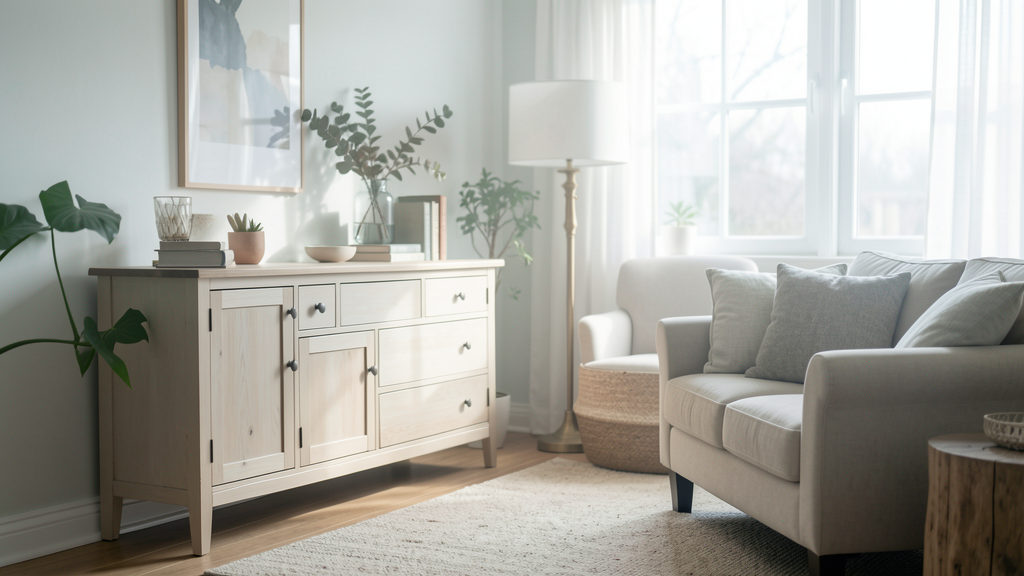
Last February, I stood in my garage staring at a 1980s oak vanity I had dragged home from a thrift store in Hoboken. The finish was a thick, yellowing varnish that had seen better decades. My instinct, honed by years of watching DIY tutorials, was to reach for the 80-grit sandpaper and spend the weekend removing every trace of the original coating. But I stopped. In 2026, we have access to adhesion technologies that make the "sand to bare wood" mandate look positively archaic. The question isn't whether you can paint without sanding, but whether the specific surface sheen and adhesion of your piece demand it.
Most amateur refinishers treat sanding as a ritual—a way to prove they worked hard for the result. I treat it as an engineering calculation. If you sand when you didn't need to, you are wasting your most valuable resource: time. If you don't sand when you should have, you are watching your paint peel off in sheets six months later. The difference lies in assessing two specific variables: the sheen of the existing surface and the stability of the current coating.
The Sheen Factor: Gloss Is the Enemy
The primary reason to sand is mechanical adhesion. Paint needs something to grab onto, a microscopic topography we call "tooth." A flat, matte surface already has tooth; it is porous and light-scattering. A high-gloss surface, however, is smooth and often non-porous. If you apply latex paint directly over a high-gloss enamel without addressing this slickness, the new paint lacks the friction required to bond permanently. It will slide right off.
I have a simple rule I use in the workshop: anything satin or lower usually skips the sandpaper, anything semi-gloss or higher gets scuffed. There are exceptions, particularly with oil-based paints which cure harder than latex, but sheen is your first diagnostic tool.
I once tackled a mid-century modern desk with a factory lacquer finish that was incredibly shiny. I tried the "clean and prime" method, skipping the sanding. The result was disastrous; the primer beaded up like water on a waxed car. I had to scrape it off and start over. Contrast that with the matte, chalky finish on a tired cedar chest I found last month. I simply wiped it down with a degreaser and applied a high-hide primer. No sanding. The paint has cured rock hard because the original surface provided enough mechanical grip for the new coating to anchor itself.
Performing the Adhesion Test
Relying on your eyes isn't enough; you need to physically interrogate the furniture. This is where we separate the pieces that need a sander from the pieces that just need a good scrub. Before you even think about opening a can of primer, you must perform the adhesion test.
Go to the most inconspicuous spot on the furniture—usually the inside of a leg or the back panel. Press a piece of high-quality duct tape firmly onto the existing finish. Rub it down with your fingernail to ensure total contact, then rip it off aggressively.
Examine the tape and the wood.
- Scenario A: The tape comes off clean, and the paint remains intact. This indicates strong adhesion. The existing coating is bonded well to the substrate. You likely do not need to remove it, provided the sheen isn't high-gloss.
- Scenario B: The tape pulls up chunks of paint, varnish, or stain, revealing bare wood underneath. This is a failure point. The existing finish is chalking or has lost its bond. If you paint over this, the new layers will fail because the foundation is unstable. In this case, sanding is not optional; you must remove the loose material until you reach a stable surface.
I used this exact test on a laminate dresser I was planning to flip. The tape peeled off nothing, but the surface was slick plastic. The adhesion was good, but the tooth was nonexistent. A light scuff with a maroon abrasive pad took ten minutes and gave the primer the grip it needed. Conversely, when I was removing white heat rings on a wood table using a household iron, I noticed the finish was brittle. Had I painted over that without scraping and sanding the compromised areas, the moisture in the paint would have caused further blistering.
When Bonding Primers Replace Sandpaper
If your furniture passes the tape test (Scenario A) but has a sheen level that worries you, put down the sander and pick up a bonding primer. This is the single biggest shift in furniture finishing in the last decade. Modern waterborne bonding primers are engineered with resins that grip to glossy surfaces like plastic and tile without mechanical abrasion.
I am particularly fond of the hybrid shellac primers available now. They dry in fifteen minutes, stick to virtually anything, and seal in tannins that might bleed through light paint. I used this product exclusively on turning a $30 roadside dresser into a high-end credenza last year. The dresser had a slick, dark factory finish. I didn't touch it with sandpaper. I wiped it down with a degreaser to remove the silicone wax the previous owner had used, rolled on two coats of a high-bond primer, and topcoated it. That piece is currently in a high-traffic rental apartment and hasn't chipped once.
Using a bonding primer adds a cost premium—about $15 to $20 more per gallon than standard primer—but you have to weigh that against the cost of your labor. If you value your time at even minimum wage, the ten minutes it takes to degloss and prime versus the three hours it takes to sand a large bureau down to bare wood is a no-brainer math equation.
The Specific Cases Where Sanding Is Non-Negotiable
There are scenarios where no amount of chemical wizardry will save you from the sandpaper. You must sand if you are dealing with physical texture or structural damage.
If you have a piece with "alligatoring," where the old paint is cracked and resembling reptile skin, you must sand that down. The ridges create high and low spots that will show through your new paint job, looking amateurish. No primer fills deep texture valleys well enough to create a smooth finish. Similarly, if you are trying to change the profile of the wood—removing rounded edges on a dresser to make them square, or scraping off dents—sanding is part of the shaping process, not just the prep process.
Another critical instance is raw wood stain. If you are painting over a piece that was stained but never sealed, or where the sealant has worn off, you need to scuff it. Raw wood absorbs liquid unevenly. If you apply liquid primer to raw, unsanded wood, the grain will raise (swell), creating a fuzzy surface that feels rough to the touch. A quick pass with 220-grit sandpaper knocks down the grain and accepts the liquid evenly.
Many beginners confuse stripping with sanding. Stripping removes the finish chemically; sanding abrasively removes it. I rarely strip anymore unless the wood underneath is spectacular and worth showing. For painted furniture, stripping is usually overkill. If you are curious about the bare wood underneath, read myth: you must always strip old furniture down to bare wood, but for most budget makeovers, it is an unnecessary step that introduces harsh chemicals into your home.
The Cost of a Mirror Finish
We also need to discuss the aesthetic you are trying to achieve. This is where personal preference dictates the workflow. If you are aiming for a high-gloss, lacquer-like modern finish—the kind you see on Mcmansion cabinet door styles that look modern with new hardware—you cannot skip the sanding. Not for adhesion, but for reflection.
High-gloss finishes are unforgiving. They amplify every imperfection. If you paint over a rough texture without smoothing it first, the gloss will highlight every bump and scratch. To get that factory-fine look, you need to sand the primer coat with high-grit paper (320+ grit) once it dries. This creates a glass-smooth substrate for the topcoat. However, if you are doing a matte or eggshell finish, or a distressed "farmhouse" style where brushstrokes are part of the charm, obsessive sanding is purely performative.
Ultimately, the decision to sand comes down to the stability of the current layer and the slickness of the surface. If the existing paint is flaking, sand it off. If the existing paint is glossy, scuff it or use a bonding primer. If the existing paint is dull and intact, clean it and paint it. Stop treating your furniture like a construction site and start treating it like a restoration project.
Assessing the Trade-off
The goal of budget styling is high impact with low friction. We aren't museum curators; we are people trying to make our homes look beautiful on a Tuesday night without going broke. Sanding dust is invasive, messy, and physically exhausting. If you can avoid creating that dust by spending $12 on a can of premium primer, you have effectively bought yourself three hours of your life back.
I always encourage readers to browse the furniture-makeovers category to see the variety of results achievable with different methods. You will notice that the most successful projects aren't the ones where the creator sanded the wood into oblivion. The best projects are the ones where the creator respected the material's current state and worked with it, using chemistry where physics would have required sweat.
The next time you look at a tired dresser, don't just grab the sandpaper out of habit. Ask yourself what the surface really needs. Is it rough enough? Is it clean enough? Is the existing finish holding on tight? Answer those three questions honestly, and you will know exactly whether you are reaching for the orbital sander or the roller. The paint will adhere better, your arms will thank you, and your weekends will remain your own.
Read next

The Harsh Truth About Stripping Furniture Down to Bare Wood
Stop ruining your weekends with toxic chemical strippers when a simple deglosser or bonding primer can give you a flawless finish in half the time.
By Beatriz Costa · 8 min read
Can You Actually Transform a $30 Roadside Dresser into a Designer Credenza?
By strategically replacing the legs, hardware, and finish of a generic MDF dresser, you can achieve a luxury aesthetic for 90% less than retail.
By Beatriz Costa · 7 min read