
7 'Mcmansion' Cabinet Door Styles That Look Modern with New Hardware
Stop looking at your honey oak cathedral doors with despair; swapping in 12-inch brass pulls can edit the visual weight of your kitchen without a single drop of paint.


There is a specific kind of interior design fatigue that sets in when you live with the architectural hangover of the 1990s and early 2000s. We are talking about the "Mcmansion" era of cabinetry—heavy, honey oak, cathedral arches, and profiles that scream "suburban builder grade" rather than curated sanctuary. Most renters and homeowners assume the only cure for these heavy wood lines is a full demolition or a messy, weekend-consuming paint project.
If you are budget-conscious or simply lack the energy to sand down layers of polyurethane, you actually have a much sharper tool in your arsenal: hardware. The right pull does not just open a door; it creates a new visual horizon line that can interrupt and modernize even the most clunky profiles. By utilizing long linear brass or integrated edge pulls, we can trick the eye into seeing sleek, modern geometry rather than dated curves.
Here are seven specific "Mcmansion" door styles and the exact hardware strategy required to drag them into 2026.
The Cathedral Arch: Fighting the Curve with Linearity
The cathedral arch is perhaps the most notorious offender of the era. It features a stepped, rounded top that mimics a church window, usually sitting on a square recessed panel. The curve is the problem; it feels fussy and traditional. When you pair this door with a small, 3-inch or 4-inch arch handle, you double down on the "old world" vibe.
To fix this, you need aggressive contrast. You must override the busy geometry of the arch with a rigid, ultra-long bar pull. We are talking 12-inch or even 18-inch lengths in unlacquered brass or matte black. By installing a long, straight horizontal line across the center rail (or slightly lower for a contemporary look), you create a focal point that competes with the arch. The straight line of the pull visually "cuts" the busyness of the curved top, making the arch feel like an intentional architectural detail rather than a dated leftover.
Heavy Raised Panels: Using Edge Pulls to Reduce Visual Bulk
Raised panel doors are the standard for traditional cabinetry, characterized by a center panel that floats above the frame. The issue with the "Mcmansion" variety is the depth; they are often bulky and create heavy shadows, making the kitchen feel cavernous and dark. Adding a knob or standard pull just draws attention to how thick the wood is.
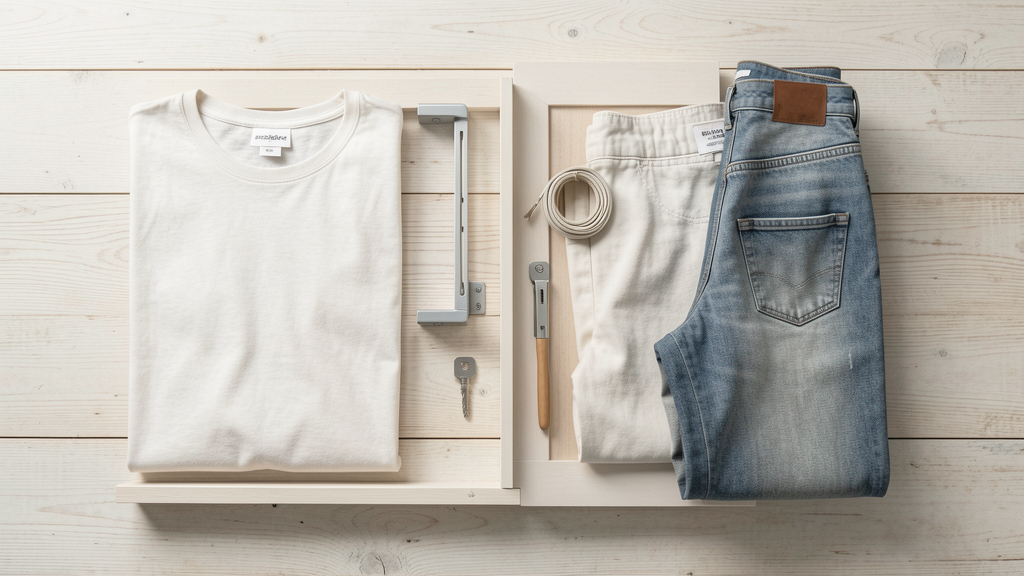
The solution here is to go invisible—or at least, barely there. J-pulls or edge pulls are the secret weapon. These are mounted on the top or bottom rail of the door (or the side for drawers) rather than the face. Because they are integrated into the edge, they eliminate the protrusion of hardware on the face of the cabinet. This streamlining causes the eye to glide over the heavy wood rather than getting snagged on protruding knobs. It gives a heavy wood cabinet a surprisingly Scandinavian, minimalist feel.
Can Beaded Inset Doors Be Saved?
Beaded inset cabinets feature a groove or bead detail cut into the inside edge of the frame where the door sits. This style is overwhelmingly "country" or "farmhouse"—think Shaker style on steroids. While the farmhouse trend has faded, these cabinets remain. If you add ceramic chicken knobs or oil-rubbed bronze cups, you will essentially be living inside a themed restaurant.
However, beaded inset doors have incredibly crisp lines that actually lend themselves well to a "modern organic" aesthetic if you swap the hardware finish. The trick is mixing metals and finishes against the wood. Use a brushed brass tube pull that is substantial in thickness. The geometric tube shape contrasts with the tiny, repetitive beading texture. It turns a "cute" country door into something that feels textured and artisanal rather than kitschy.
I often see people convinced that the only way to update beaded wood is to strip the stain, but as I cover in the Myth: You Must Always Strip Old Furniture Down to Bare Wood discussion, preserving the original patina can add depth that paint destroys. The hardware does the heavy lifting here.
Arched Mullion Glass: From Dusty Hutch to Modern Bar
Mullion doors with glass inserts and arched tops are usually found on the upper cabinets or the standalone hutch. They were designed to display fine china, but in 2026, they usually just display a clutter of mismatched Tupperware. The arch feels dainty, and the grid of the mullions is visually busy.
The pivot here is to lean into the "bar" aesthetic. Keep the glass clear (do not frost it) and install heavy, squared-edge brass bar pulls vertically. Yes, vertically. Horizontal pulls emphasize the width of the arch, but vertical pulls pull the eye upward, emphasizing the height of the ceiling and making the arch feel Gothic and architectural rather than domestic. Pair this with integrated under-cabinet lighting and a neat row of barware, and that dusty hutch suddenly reads as a high-end drinks station.
The Wide Stile Problem: Proportion vs. Heavy Wood
Some cabinets from this era suffer from "fat frame" syndrome. The vertical stiles and horizontal rails of the frame are excessively wide, leaving little room for the center panel. This gives the cabinetry a blocky, heavy appearance that dominates the room.
You cannot fix the width of the wood, but you can alter the perceived proportions of the hardware. Standard 6-inch pulls will look tiny and lost on these wide stiles, emphasizing the scale of the wood. You must overscale the hardware to match the scale of the door. Use "T-bar" pulls that are substantial—think 1 inch in diameter and 12 to 16 inches long. The weight of a heavy T-bar balances the visual weight of the wide wood frame. It creates a sense of intentionality, making the heavy wood feel like a deliberate, masculine design choice rather than a builder error.
Handling the Awkward Radius of an Appliance Garage
The appliance garage—the cabinet above the countertop meant to hide the toaster—often features a curved bottom radius that mimics the countertop edge. It is a blob of wood that interrupts the flow of upper cabinets. Putting a single knob in the center of the curve is functionally awkward and visually jarring.
The modern fix is to ignore the curve entirely. Do not center hardware on the radius door. Instead, if the door opens like a standard door (not a flip-up), mount your long brass pulls vertically on the side stile, aligning them perfectly with the pulls on the adjacent flat cabinet doors. This creates a continuous vertical line across all upper cabinets. When the pulls align perfectly, the human brain stops seeing the weird curved bottom of the appliance garage and starts seeing a unified wall of storage.
Curved Toe-Kicks and Continuous Pulls
We have talked about doors, but let’s look at the island. Many 90s islands feature a curved "radius" front, often with matching curved cabinet doors. Installing individual straight pulls on a curve is a nightmare; they never line up, and the gaps look messy.
For a curved island, continuous integrated pulls are the only professional-looking option. This involves routing a channel into the top rail of the doors and inserting a continuous metal bar that runs the entire length of the cabinet run. If you cannot retrofit integrated pulls, look for "scallop" pulls designed for curves, but in a brushed brass finish. It softens the transition. The goal is to eliminate the "stop-and-start" visual rhythm of individual knobs, which highlights the dated curve, and replace it with one continuous golden band.
Sourcing on a Budget
Achieving this look does not require sourcing $50 brass pulls from a high-end boutique. The aesthetic difference between a $50 unlacquered brass pull and a $15 solid brass option from a big-box retailer is often negligible to the naked eye. You are paying for the brand name, not the patina. Buying in 10-packs online can bring the cost per pull down significantly, keeping your total renovation well under $200 while transforming the entire room's value.
Updating your kitchen hardware is the ultimate high-impact, low-effort project. It respects the existing architecture while forcing it to behave according to modern tastes. By selecting the right profile to counterbalance your specific door style, you stop fighting the "Mcmansion" bones of your home and start accessorizing them. The result feels curated, timeless, and distinctly current, proving you don't need a sledgehammer to change the way a room feels.
Read next
Can You Actually Transform a $30 Roadside Dresser into a Designer Credenza?
By strategically replacing the legs, hardware, and finish of a generic MDF dresser, you can achieve a luxury aesthetic for 90% less than retail.
By Beatriz Costa · 7 min read

The Harsh Truth About Stripping Furniture Down to Bare Wood
Stop ruining your weekends with toxic chemical strippers when a simple deglosser or bonding primer can give you a flawless finish in half the time.
By Beatriz Costa · 8 min read