
DIY Architectural Wall Molding Using Only Cardboard Boxes
Achieve a high-end European wainscoting aesthetic for under $15 by upcycling delivery boxes into architectural details that defy detection.

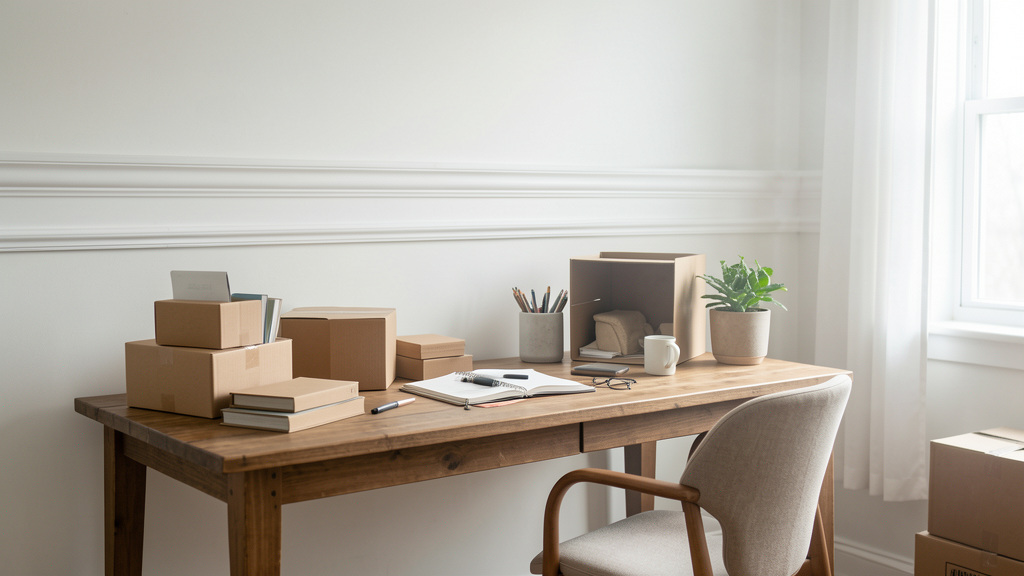
The obsession with "Old Money" interiors and geometric wall paneling has dominated Pinterest boards for the last eighteen months, yet the cost of timber materials hasn't budged. If you have priced out poplar or primed pine recently, you know that achieving that grid-like wainscoting look in a dining room can easily run into the hundreds of dollars, not including the miter saw and nail gun you might need to buy. We are conditioned to believe that architectural details require wood, stone, or plaster, but that is a marketing fallacy.
I have been experimenting with unconventional materials to achieve high-impact textures on a shoestring budget. Last year, I focused on fabric and filled a massive living room wall for under $20 using drop cloths, but for 2026, I wanted something rigid and structural. The answer was sitting in my hallway, a pile of Amazon delivery boxes waiting for the recycling truck. By treating cardboard not as a packing material but as a dimensional lumber substitute, you can build sophisticated molding that is indistinguishable from painted wood once installed.
The Art of Selecting Your "Lumber"
Before you grab a utility knife, you must understand that not all cardboard is created equal. The success of this project relies entirely on using "double-wall" corrugated cardboard. You can identify this by looking at the side profile of the box; it should have two layers of flutes (the wavy part) sandwiched between three sheets of liner paper. Single-wall cardboard, the kind used for shoe boxes or standard shipping mailers, is too flimsy. It will bow under the weight of paint and lack the structural heft required to hold a crisp 90-degree corner.
I collected boxes from a local appliance store; refrigerator and washer boxes are the gold standard because they are massive, thick, and free of heavy printing ink. You want your raw material to be as plain brown as possible. Glossy printing on the outside can sometimes resist primer and paint adhesion, leading to a frustrating afternoon of peeling layers. If you only have printed boxes available, give them a quick once-over with high-grit sandpaper to rough up the surface before you do anything else.
Mapping the Grid Without the Math Anxiety
The most common mistake amateur DIYers make with wall molding is laying out a grid that feels "off." Human eyes are remarkably sensitive to symmetry. If your wall is 120 inches wide, simply dividing it into four equal 30-inch sections works mathematically, but visually it might look stiff. Instead, I prefer the "center-out" method.
Stand back and look at your wall. You want the center point to be the focal point. For a standard 8-foot high wall, I recommend a chair rail height of 32 to 36 inches from the floor. This is lower than you might think, but it anchors the room better. Draw your horizontal guideline level with the floor using a laser level or a standard spirit level. Once that horizontal line is down, measure its total length. Divide that number by the number of boxes you want to center. For my project, I used a layout that featured three vertical rectangles in the center and two half-width rectangles on the outer edges. This framing technique makes the wall look wider and more custom than simply tiling repeating squares from corner to corner.
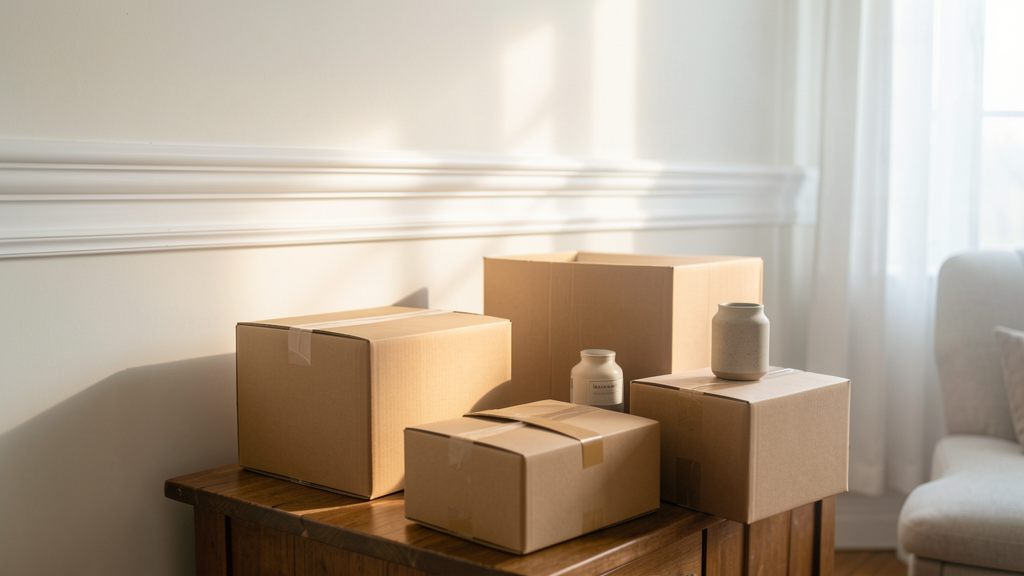
Step 1: Rip Your Strips
Precision cutting is where cardboard separates itself from wood. You do not need a saw. A fresh utility blade blade and a metal straightedge are your best tools here. For the horizontal chair rail and the baseboard strips, cut your cardboard into lengths 2.5 inches wide. For the vertical stiles, cut them 2 inches wide.
I highly recommend cutting your strips about half an inch longer than the actual wall measurement. You can always trim the excess later with a precision knife, but you cannot easily add length if you cut short. Lay your metal ruler down, score the cardboard heavily without cutting all the way through on the first pass, and then make a second, deeper cut. Do not try to saw through it; let the blade do the work. This results in edges that are clean and perpendicular to the face.
Step 2: The Double-Layer Technique for Heft
Standard cardboard is roughly 1/8 of an inch thick. Real wood molding is usually at least 3/4 of an inch. If you apply a single layer of cardboard to your wall, it will look like paper stuck to a wall. To trick the eye, we need to fake the depth.
Take your cut strips and glue a second strip of the same width directly on top of the first one using standard white craft glue or wood glue. Clamp them or stack heavy books on them while they dry. This creates a "laminated" beam that is roughly 1/4 inch thick. While still thinner than wood, this density prevents light from passing through the material and gives the molding a solid, architectural shadow when hit by ambient light. This double-layering is the non-negotiable secret to the expensive look.
Step 3: Adhesion Strategy
You might be tempted to use a hot glue gun, but put it down. Hot glue becomes brittle and can detach from the wall over time, especially in temperature fluctuations. You need a bond that is permanent.
I used a heavy-duty construction adhesive suitable for use on paper and drywall. Apply the adhesive in a zigzag pattern to the back of your laminated strips. Press the strip firmly onto your drawn guidelines. Because cardboard is so light, it usually sticks immediately without needing nails. However, for peace of mind, you can use a few small pieces of painter's tape to hold the corners in place while the adhesive cures. Start with the horizontal chair rail piece first. Ensure it is perfectly level. Once that is locked in, install your vertical pieces. Use a square to ensure they meet the horizontal rail at a perfect 90-degree angle.
Step 4: Achieving a Seamless Finish
At this stage, the room looks like a shipping depot. The seams where the cardboard strips meet will have visible gaps, and the corrugated edges might be exposed. This is where the magic happens.
You need to fill those gaps to make the joints disappear. Do not use standard wood filler; it is too rigid and will pop off the flexible cardboard. Instead, use a lightweight spackle or a non-shrinking acrylic caulk. Run a small bead along every joint and use your damp finger to smooth it into the crevice. Wipe away the excess immediately. Once dry, give the entire surface of the cardboard a light sanding. This knocks down the "fuzz" of the paper fibers and prepares the surface for paint.
Why Texture Matters More Than Color
When it comes to painting, you have a choice to make. You can roll on a standard semi-gloss white, which will look nice, or you can mimic the velvety texture of plaster. I opted for the latter to give the wall a tactile, European feel.
To achieve this, I did not buy expensive specialty textured paint. I followed a technique I have relied on for years, similar to the one detailed in my guide on 4 textures you can mimic with a mix of baking soda and paint. By mixing a measured amount of baking soda into flat latex paint, you create a gritty, matte mixture that dries to look exactly like Venetian plaster or raw stone. Apply this mixture with a brush rather than a roller, using random strokes to ensure the texture is inconsistent. The grain of the baking soda interacts beautifully with the cardboard surface, disguising the material origin entirely.
Does Cardboard Hold Up?
There is an honest trade-off here. Cardboard is organic and hygroscopic, meaning it absorbs moisture from the air. I would not recommend installing this in a bathroom with a shower that produces heavy steam daily. In a high-humidity environment, the cardboard could eventually warp.
However, for living rooms, bedrooms, and hallways, this is surprisingly durable. Once sealed with paint and the baking soda mixture, the cardboard is encased. It is not load-bearing, so you cannot hang heavy coats on it, but it will withstand the bumps of daily life just as well as primed pine MDF. If a piece gets dented, you simply patch it with a bit more spackle and touch up the paint. It is arguably easier to repair than wood because you don't have to worry about sanding through a veneer.
The New Reality of Home Decor
We often confuse cost with value. A wall covered in expensive timber trim is valuable in real estate appraisal, perhaps, but a wall that transforms the atmosphere of your home and costs you the price of a tube of glue and a quart of paint holds a different kind of worth. It proves that good design is not about what you buy, but how you see. By looking at a pile of discarded boxes and seeing architectural potential, you reclaim agency over your living space. You stop being a consumer of trends and become a creator of your environment. That satisfaction is something no catalog can sell you.
Read next

How I Filled a Massive Living Room Wall for Under $20 Using Drop Cloths
I filled a 14-foot living room wall with oversized canvas art using only painter's drop cloths and furring strips for a total cost of $18.47.
By Camila Souza · 6 min read

4 Textures You Can Mimic with a Mix of Baking Soda and Paint
Turn cheap, glossy vases into high-end ceramics by mixing pantry staples with acrylic paint for four distinct professional textures.
By Camila Souza · 7 min read