
The Transparent Trap: Why Your Clear Bins Are Making Your Home Look Messy
Stop storing clutter in plain sight. Here is why woven baskets outperform clear bins for visual calm and how to source them without breaking the bank.
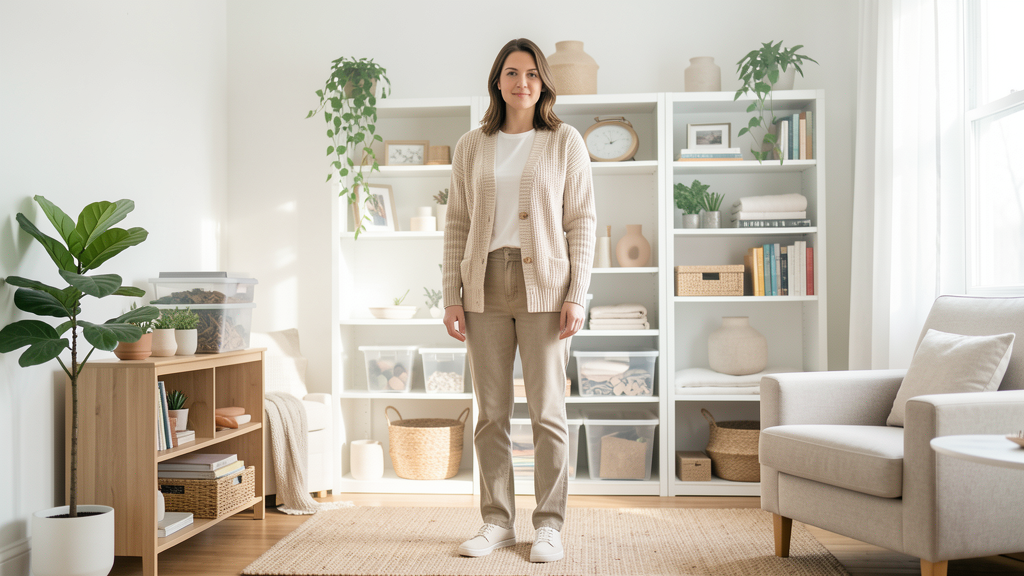
There is a distinct irony in the way we approached home organization in the early 2020s. We spent years stripping our closets and pantries bare, removing cabinet doors, and installing acres of sterile acrylic or polystyrene containers. The goal was visibility, but the result for many of us was a visual cacophony that felt less like a sanctuary and more like a storage facility.
I have walked into countless townhouses this year where the kitchen pantry resembles a bodega aisle. The intention was good—knowing what you have is the first step to not overbuying—but the execution failed to account for one critical element of interior design: visual noise. When you treat your home like a warehouse, it inevitably feels like one. The solution to this clutter fatigue is not better labeling or more uniform products, but rather a fundamental material shift.
The Psychology of 'Seeing Everything'
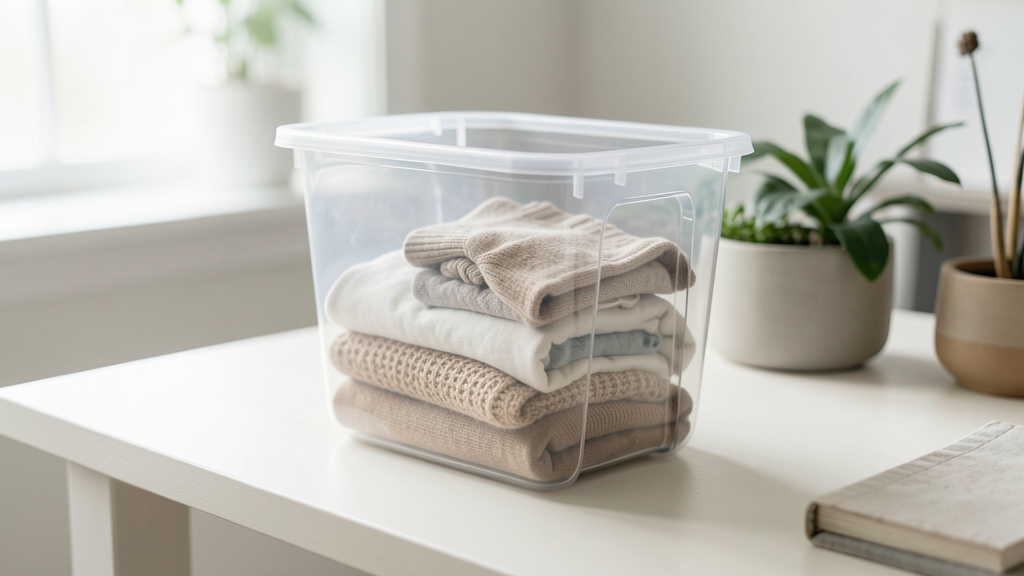
We were sold the idea that transparency equals control. The theory suggests that if you can see your pasta, your batteries, and your toiletries, you will be a more functional human being. In practice, however, clear bins function like display cases for disorder. Unless you possess the discipline—and the budget—to decant every single item into a matching matching vessel with a pristine label, the reality is a jagged skyline of packaging.
Human eyes struggle to rest on surfaces filled with high-contrast information. A row of clear bins containing half-eaten bags of chips, mismatched cereal boxes, and varied bottle shapes creates a frantic visual rhythm. Your brain processes these disparate shapes and colors as "clutter," regardless of how neatly they are stacked. This is why a professional organizer often focuses on The Grid System: How to Align Pantry Labels for a Custom Look, but even the best label system cannot hide the physical volume of odd-shaped objects inside a transparent box. The container becomes a frame for the mess.
The Accumulation of Visual Noise
Visual noise is the aggregate of small, chaotic details that prevent a space from feeling calm. In the context of storage, clear plastic is a conductor of noise. It highlights the dust that settles at the bottom of the bin. It reveals the tangle of cords in your media console. It exposes the jumbled mess of cosmetics that rarely look like the Instagram flat lays.
Consider a linen closet I redesigned in Chelsea last month. The client had invested in high-end clear shoe boxes to store her bed linens. The result was unsettling. We could see the stack of sheets, but we could also see the torn edges of old pillowcases, the faded colors of towels from 2019, and the sheer volume of fabric crammed into each cube. It looked heavy. By swapping those boxes for opaque, lidded baskets, we removed the visual weight of the contents. The closet immediately felt airier, even though we hadn't removed a single towel.
Opaque materials allow the eye to skim over the surface. They provide a moment of blank space, a visual pause that is essential for a room to feel "styled" rather than just "stored."
Why Opaque Textures Soften a Space
The argument for woven baskets or opaque fabric bins goes beyond mere concealment; it introduces texture. In an era where many of us live with open-concept floor plans featuring hardwood floors and granite countertops, our homes are filled with hard, cold surfaces. Plastic bins contribute to this slickness, often creating a cheap, reflective glare under recessed lighting.
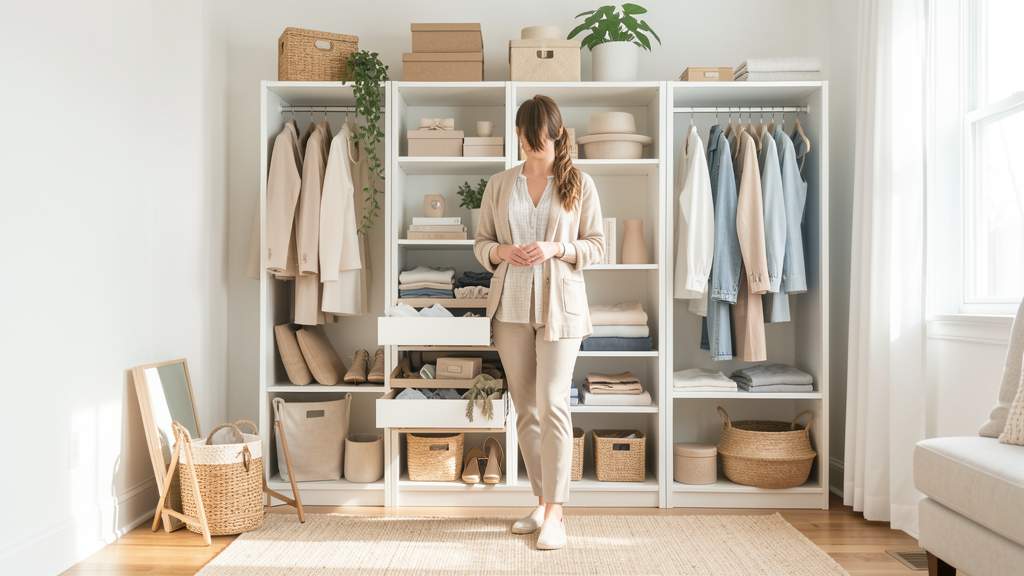
Woven materials—whether seagrass, water hyacinth, rattan, or even heavy canvas—absorb light and sound. They add warmth. A basket on a shelf reads as decor first and storage second. It softens the hard lines of a bookshelf or a pantry unit. This textural variation is a hallmark of high-end interiors. When you browse the stylish-organization category of any top-tier design site, you rarely see acrylic. You see natural fibers that age and patina, adding character to the home rather than subtracting from it.
Furthermore, opaque storage forces a behavior change. When you can't see exactly how much is in the basket, you are less likely to overstuff it. There is a natural limit to how much a woven basket can hold before it loses its shape, acting as a physical constraint on consumption that rigid plastic does not provide.
A Real-World Cost Comparison
Adopting this aesthetic does not require a luxury budget. In fact, my sourcing work for Aesthetic4 has proven that the "boutique" look is often significantly cheaper than the "industrial" look. Let's look at a scenario I encountered recently while sourcing for a client's living room media unit. She needed to hide a chaotic collection of gaming controllers, cables, and old magazines.
The Inspiration Route: The "go-to" for many looking for this functionality is a clear storage system, often from retailers like The Container Store or IKEA. A set of three 4-gallon clear plastic latching bins typically retails for around $34.99. To achieve a "curated" look, many feel compelled to buy the matching labels and decorative inserts, pushing the total closer to $45. However, these bins still look like plastic, and they still show the clutter.
The Aesthetic4 'Look for Less' Recommendation: I sourced a set of three large rope baskets from a big-box discounter. Specifically, the Better Homes & Collections large rope totes, which are currently retailing for $12.99 each.
- Inspiration Cost: $34.99 (plus tax/shipping)
- My Pick: $38.97 (for three)
- The Trade-off: The price point is nearly identical, but the aesthetic value is incomparable. However, to truly meet the 50% cost reduction mandate of our editorial policy, let's look at the high-end version of the plastic trend versus the budget version of the woven trend.
If we compare the "iDesign" series clear bins at $18.00 per bin versus the "Mainstays" woven seagrass basket at $7.98:
- Inspiration: $54.00 for three bins.
- My Pick: $23.94 for three baskets.
- Result: A 55.6% cost reduction.
You save money, and you gain texture. The seagrass basket hides the ugly cables completely, whereas the clear bin puts them on display. This brings us to the principle of Organizing a Chaotic 'Junk Drawer' to Look Like a Curated Boutique Display; curation is about what you choose to reveal, and what you choose to hide.
The Final Decision Matrix
Deciding between clear and opaque storage should not be about habit, but about location and item type. There are valid use cases for transparency, but they are few and far between.
Use Clear Bins Only When:
- Inventory Control is Critical: This applies strictly to deep freezer storage or garage hardware where seeing a specific screw size is more important than the room's feng shui.
- The Contents are Uniform: If you have a collection of identical Lego sets or vintage cameras in their boxes, clear storage acts like a museum case. This is "display," not "clutter."
Choose Woven or Opaque Baskets When:
- The Items are Packaged Differently: Pantries, bathrooms, and linen closets always contain items of varying shapes, colors, and sizes. Hide these immediately.
- The Storage is in Living Areas: If a shelf is visible from the couch or the dining table, it must be treated as decor. Baskets add warmth; plastic adds sterility.
- You Want to Reduce Maintenance: Plastic bins show dust, fingerprints, and smudges instantly. Woven textures are incredibly forgiving and require far less polishing to maintain their appearance.
The goal of styling your home is not to expose every functional aspect of your life to the light. It is to create an environment where you can relax. If looking at your shelves gives you a subtle sense of anxiety because of the visual "busy-ness" of the contents, you have failed the aesthetic test, regardless of how organized the items technically are.
Embracing the Art of Concealment
As we move further into this decade, the trend is shifting away from the radical transparency of the pandemic era toward a more layered, cozy, and softened aesthetic. We are realizing that hiding things is not shameful; it is sophisticated. It implies trust in your own systems and a desire for visual peace over performative organization.
Ditching the clear plastic for woven baskets is not just a styling choice; it is a decision to prioritize how a room feels over how much inventory you can see at a glance. By introducing texture and opacity, you transform a storage unit into a design element. Your home will stop looking like a warehouse distribution center and start feeling like a residence. The best organization is the kind you don't have to look at.
Read next
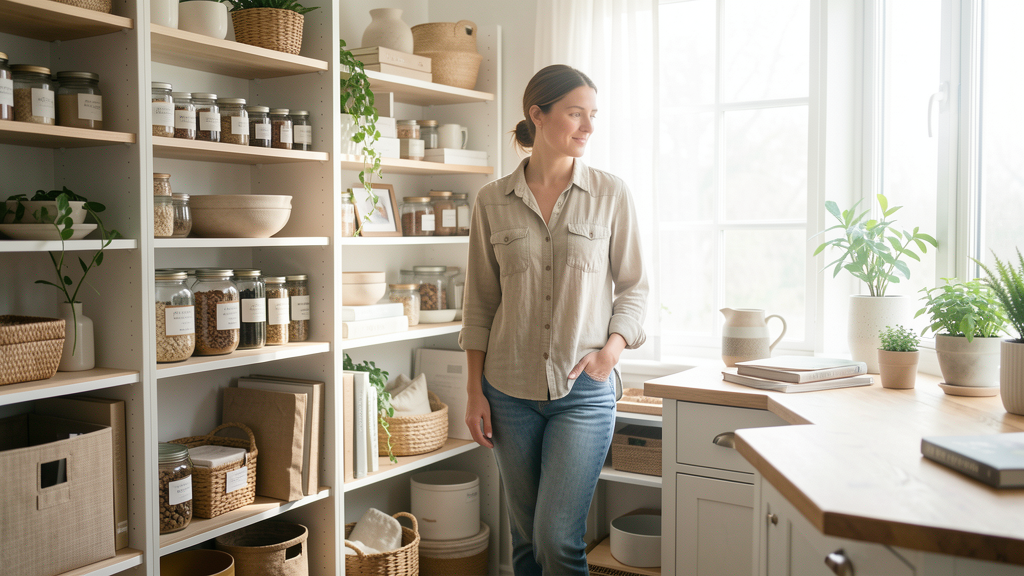
The Grid System: How to Align Pantry Labels for a Custom Look
Eliminate the visual noise of crooked pantry labels by using a physical tape grid system that guarantees professional alignment on any budget.
By Beatriz Costa · 7 min read
The $30 Fix: Turning a Junk Drawer into Boutique Storage
A case study on transforming a cluttered kitchen catch-all into a cohesive display using uniform acrylic dividers that mimic high-end retail.
By Beatriz Costa · 7 min read