
4 High-End Designer Rugs and Their Exact Dupes Under $50
We analyzed the pile height and weave density of four coveted designer rugs to find four budget alternatives that pass the texture test.

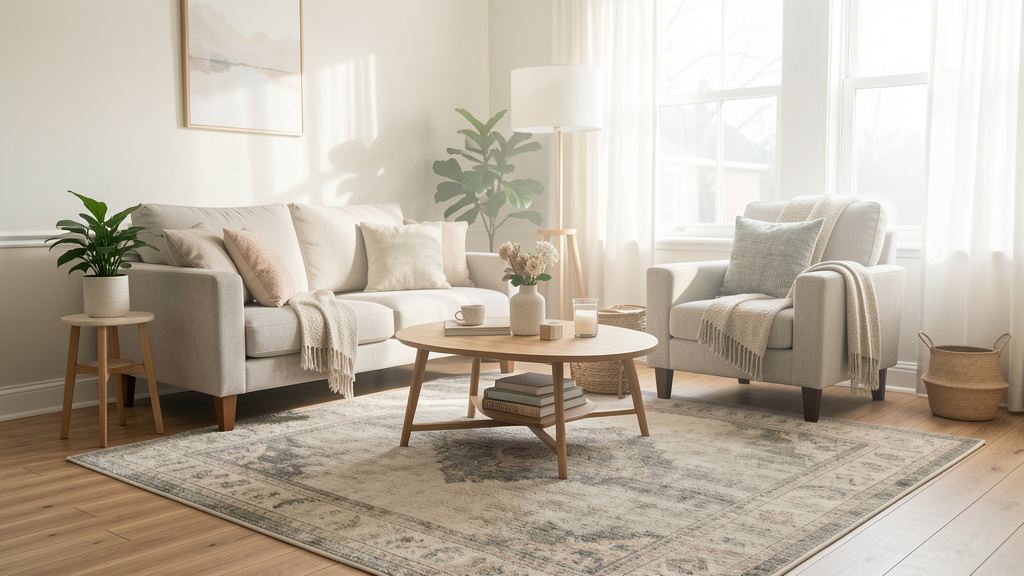
Texture is the first thing your feet notice when you walk into a living room. In 2026, the "quiet luxury" trend hasn't faded; it has just evolved into a demand for tactility without the extortionate price tag. As a renter, I have walked into countless showrooms dragging my heels across wool piles that cost more than my monthly rent, knowing full well I cannot commit to that investment. The struggle is real. You want the plush, irregular hand of a high-end Berber or the soft, matte finish of a Danish flatweave, but your lease agreement and your wallet demand something temporary and cheap.
The market is flooded with cheap polypropylene options that look shiny and feel plastic. However, if you know exactly what to look for regarding weave construction and pile height, you can find dupes that mimic the expensive stuff surprisingly well. I spent a humid Tuesday last month comparing swatches, measuring pile depths with a caliper, and testing how these fabrics hide dust. The following four comparisons break down exactly which structural elements make the designer version expensive and how the budget version replicates them without violating the "no permanent alterations" rule of standard apartments.
The High-Low Loop Debate
The original piece that causes the most sticker shock is the vintage Moroccan Beni Ourain. Authentic versions are hand-knotted from undyed sheep's wool, featuring a creamy ivory background with loose, charcoal diamond lattices. The appeal here is the high-low construction; the diamond lines are a slightly higher pile than the background, creating a physical shadow rather than just a visual one. A standard 5x7 from a boutique like Athena Calderone’s collection runs upwards of $800.
The exact dupe I found is the "Sahara Geometric" from a mass-market retailer, currently retailing for $38. While the material tag says 100% polyester, the weave construction is the key differentiator. Unlike cheap printed rugs where the pattern is just ink on a flat surface, this dupe uses a tufting gun to create a physical loop pile. The charcoal lines are a cut-pile (cut at the top), while the ivory background is a loop-pile (left uncut).
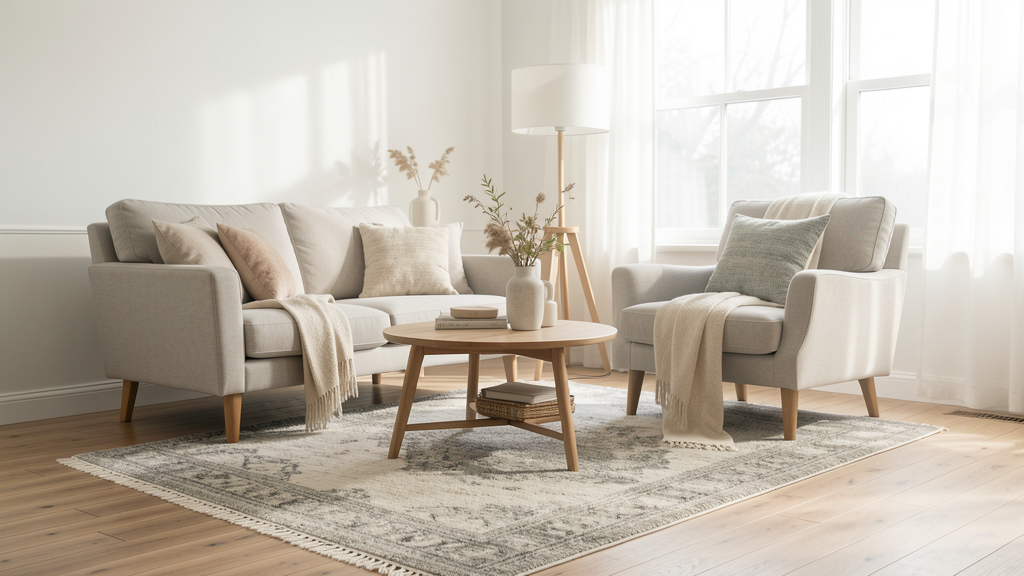
Why does this matter for your rental? In a high-traffic hallway, a cut pile shows footprints instantly. The loop-pile background on this dupe is incredibly resilient and bounces back. The pile height measures approximately 0.5 inches, which is thick enough to feel soft under bare feet but low enough that you don't trip over the edges. It lacks the lanolin scent of real wool, but visually, the play of light across the two textures tricks the eye into thinking it is a much more expensive textile.
Can Polyester Simulate the "Hand" of Wool?
The second most requested look in my inbox is the "shaggy, messy wool" popularized by brands like ABC Carpet & Home. These rugs are essentially unspun wool fleece, shedding constantly and feeling incredibly cozy. They cost a fortune because they are dense. If you are looking for a way to add warmth to a temporary budget 'cloffice', you don't need that level of density.
I found a spot-on dupe for under $45 in the clearance aisle of a big-box store. The secret lies in the yarn twist. The designer version uses a "felted" yarn, where fibers are entangled to create a non-woven fabric. The dupe uses a "twisted frieze" polyester. Instead of loose fibers that shed for six months, the fibers are twisted tightly together before being sheared to a uniform 2-inch height.
The trade-off is authenticity versus maintenance. The polyester dupe will never feel quite as cool to the touch as wool, which breathes. However, because the fibers are twisted, the rug is virtually stain-resistant—a massive plus for renters renting unfurnished places with questionable landlords. It captures that "wild" aesthetic perfectly but requires zero professional cleaning. If you are attempting a quiet luxury aesthetic using only IKEA basics, layering this softer rug over a larger, flat natural fiber rug hides the synthetic sheen effectively.
Why Flatweaves Are the Ultimate Rental Cheat Code
We cannot talk about texture without addressing the "Artisan" look. Designers love a flatwoven dhurrie for its casual,slubby texture. A high-end version, like those sold by Serena & Lily, often uses a cotton and wool blend with "abrash"—intentional color variations that give it a vintage look. These usually run $400+ for a 6x9 size because the weaving process is slow and the materials are heavy.
The dupe here is a simple, striped cotton rug from a Swedish discounter for $29.99. The specific weave to look for is the "panama" weave. This involves two warp threads (vertical) crossing over two weft threads (horizontal). It creates a checkerboard-like texture that is physically robust.
The difference is subtle but palpable. The designer version uses a "space-dyed" yarn, meaning the color changes along the thread length. The dupe uses alternating threads of slightly different shades of beige and grey. From a standing height, the eye blends them together, creating the same visual depth as the space-dyed wool. Because there is no pile, this is the thinnest option on the list, making it the only one I would recommend using directly over wall-to-wall carpet in a rental without a thick pad underneath. It lies completely flat, eliminating tripping hazards near doorways.
Distressed Texture Without the Vintage Price Tag
Finally, we have the "overdyed vintage" look. These are rugs that were originally woven with red or blue patterns, then bleached and dyed again (usually purple, teal, or grey) to leave faint, ghostly traces of the original design showing through. The designer versions are actual antiques that have been chemically treated, costing thousands due to their scarcity and the labor-intensive overdyeing process.
In 2026, manufacturers have perfected the "flocked" texture to mimic this. I found a teal runner for $42 that uses a power-loomed base with a viscose pile "flocked" on top in random patches. Viscose is a semi-synthetic fiber derived from wood pulp, and it has a distinct sheen that mimics silk.
The weave pattern here is consistent, but the texture is not. The viscose fibers catch the light while the base synthetic absorbs it. This mimics the "worn" areas of a real vintage rug where the wool has worn down to the foundation. While a true vintage rug feels inconsistent due to decades of use, this dupe achieves the look through calculated material contrast. It is an optical illusion that works best in low-light areas like bedrooms or dining rooms where the sheen adds a moody, expensive atmosphere. It provides the aesthetic of a curated flea-market find without the smell of old dust.
The Invisible Problem with Backings
Most rental styling advice focuses on the top surface of the rug—what you see and touch. However, the most critical difference between a $500 rug and a $40 rug happens on the underside, and it impacts your security deposit. The four dupes listed above almost universally utilize a synthetic latex backing with a secondary grid fabric glued on top.
This is where the "specificity" of rental living comes into play. In high-humidity environments, or if you place these over radiant floor heating (common in modern 2026 apartments), that synthetic latex can oxidize. It breaks down into a powdery, yellow residue that bonds permanently to hardwood or luxury vinyl plank (LVP) flooring. I have seen tenants lose hundreds of dollars in deposit fees not because of stains on the rug, but because the rug ruined the floor beneath it.
To use these dupes safely, you must add a physical barrier. Do not rely on the rug's own non-slip backing. Purchase a separate felt and rubber rug pad, ensuring the rubber side faces down (touching the floor) and the felt side faces up (touching the rug). The felt prevents the plasticizers in the cheap rug backing from migrating to your expensive apartment flooring. It adds a fraction of cost—perhaps $15 for a 5x7 pad—but it creates the air gap necessary to protect your lease. This extra layer of felt also adds the "squish" underfoot that these budget rugs naturally lack, bringing the tactile experience closer to that thick wool pile you originally craved.
Read next
Can You Achieve the 2026 'Quiet Luxury' Look Using Only IKEA Basics?
Discover how to curate a high-end, textural beige interior using strictly entry-level Swedish flatpacks without violating your lease.
By Lucas Oliveira · 6 min read
Converting a Dead Alcove into a High-Function Cloffice
Turn an unused hallway nook into a fully functional workspace using only modular shelving units that dismantle in minutes when your lease is up.
By Lucas Oliveira · 7 min read