
The Geometry of Price: Why Curves Cost a Fortune and a Foam Hack
Manufacturing organic shapes creates excessive waste, but this upholstery foam tutorial lets you sculpt trendy decor for under $25.


If you have scrolled through Instagram or Pinterest in 2026, you have seen the shift. The rigid, sharp lines of mid-century modern dominance are finally loosening their grip, replaced by kidney bean coffee tables, blob mirrors, and sofas that look like they melted slightly onto the floor. It is a softer, more tactile way to live, but walking into a retail store to buy these pieces feels like a mugging. A simple curved bench often costs triple the price of its rectangular counterpart.
This is not a markup designed solely to hurt your wallet. It is a grim reality of geometry and manufacturing efficiency. The industrial world is built on the rectangle. Sheets of plywood, MDF, metal, and rolls of fabric all come in standard, linear dimensions. When a factory cuts a square table, the waste is virtually non-existent. They utilize 98% of the raw material.
The moment you introduce a curve, that efficiency collapses. To cut a circle from a square sheet, you lose the four corners. For complex, organic shapes, the waste can exceed 40%. Since the manufacturer pays for the whole sheet but only sells the usable shape, the price per unit jumps drastically. Then add the tooling costs. Cutting a straight line requires a basic saw; cutting a perfect organic curve requires a CNC machine or skilled hand labor, which adds time and complexity to the production line.
Can You Sculpt a Table Top for Under $30?
The good news is that you do not need a CNC machine to achieve the look in a rental apartment. You just need a material that is already forgiving, voluminous, and cheap: high-density upholstery foam. Unlike wood, foam is not sold in rigid sheets that generate massive waste when carved. It is sold in blocks or buns that you can slice and shave down until the shape reveals itself.
This approach solves two problems at once. First, it bypasses the waste issue because you can sand and carve the foam incrementally. Second, it creates a piece of decor that is visually substantial but physically lightweight. If you are tired of your standard rectangular coffee table but cannot afford a $900 replacement, you can build a removable "landscape" to sit on top of it. This creates the visual profile of an expensive organic table without the weight or the lease-breaking modifications.
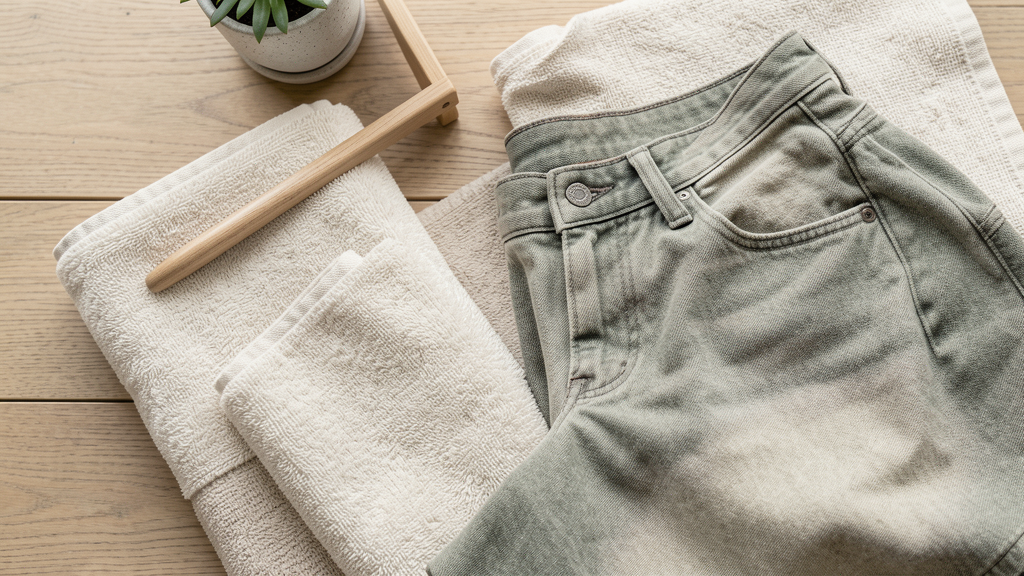
I tested this last weekend for a client’s living room refresh. We wanted to soften the edge of a very aggressive, glass-topped IKEA table that felt too cold for the space. The goal was a "floating island" aesthetic that looked like a solid piece of sculpture.
The Material Strategy
You need high-density upholstery foam, not the white floral foam from the craft store. Look for foam rated at 35ILD or higher; if you press your thumb into it, it should offer firm resistance and bounce back immediately. For a coffee table centerpiece, buy a block that is 4 inches thick. A 24 x 18 inch block usually retails for about $22 at fabric supply stores.
You also need a serrated knife—a bread knife from your kitchen works perfectly fine—and a sheet of sandpaper (around 80 to 100 grit). For the finish, buy a yard of stretch jersey knit fabric. Avoid heavy canvas or stiff linen; they do not drape over curves smoothly and will show every imperfection in your cutting.
Shaping the Silhouette
Start by sketching your shape onto the foam with a sharpie. Do not try for a perfect circle or oval. The beauty of the organic trend is asymmetry. Draw a kidney shape, a pebble shape, or a wobbly blob. Cut the general shape out with your serrated knife using long, smooth strokes. Do not saw frantically; let the teeth do the work.
Once the bulk of the shape is removed, you refine it. This is where the sandpaper comes in. Sand the edges rounding them off so there are no sharp transitions between the top and the sides. The goal is a continuous, rolling surface. Do not worry about making it perfectly even. The slight undulations give the piece a hand-crafted, artisanal feel that mass-produced furniture lacks.
Renter-Friendly Finishing Touches
Covering the foam is where you secure the "high-end" look. Lay your fabric flat and place the foam upside down in the center. Pull the fabric up around the sides, tight but not tearing. You want the fabric to hug the curve.
Here is the trick for rental safety: do not glue the fabric to the foam and do not glue the foam to your table. Use tension alone. If the fabric is loose on the bottom, you can pin it securely with sewing pins or simply tuck the excess fabric tightly underneath the foam block. The friction between the fabric and the table surface is usually enough to keep it in place, but if you have a glass surface, cut a thin sheet of non-slip shelf liner to place between the table and the foam.
The result is a squishy, tactile architectural object that completely transforms the vibe of the room. You can style it with a stack of oversized art books or a singular ceramic vase. Because the surface is soft, you can lean into the casual, lived-in aesthetic that is so popular right now.
If you are looking for more ways to elevate your space without breaking the bank, check out my guide on Recreating the 'Quiet Luxury' Aesthetic Using Only IKEA Basics. It pairs perfectly with soft organic shapes to create a home that feels cohesive and expensive. Alternatively, if you prefer a moodier vibe, the texture of the foam works surprisingly well alongside the Myth: The 'Dark Academia' Look Requires Expensive Vintage Leather Books approach.
Imperfection is the Point
There is a specific psychological benefit to making your own decor that goes beyond the $60 savings. When you buy a perfect, factory-made curved table, you are terrified of scratching it. It becomes a pedestal that you cannot touch. When you make a foam table topper, you gain a piece of furniture that invites interaction.
It is okay if the lines aren't smooth. In fact, I recommend leaving the surface slightly "nubby" rather than trying to compress the foam into a hard rock. The texture adds visual interest and absorbs light differently than smooth lacquer. This DIY captures the spirit of the 2026 organic trend—not just the shape, but the feeling of authenticity and softness in a hard world. When your lease is up, you roll up the fabric, toss the foam in the donation bin, and walk away with your security deposit intact.
Read next

Can You Achieve the 2026 'Quiet Luxury' Look Using Only IKEA Basics?
Discover how to curate a high-end, textural beige interior using strictly entry-level Swedish flatpacks without violating your lease.
By Lucas Oliveira · 6 min read
The Myth of Expensive Vintage Leather Books in Dark Academia Decor
Achieve the coveted moody scholarly vibe of Dark Academia without draining your savings by transforming cheap paperbacks with wood stain and strategic styling.
By Lucas Oliveira · 7 min read