If you want a cleaner, tailored sofa without reupholstery prices, the right budget sofa slipcover can transform tired seating for under $120, protect your deposit in a rental, and buy time before a bigger upgrade. This guide explains how to measure T‑cushions vs box seats, choose thick‑stretch fabrics that hide lumps, use foam tucks and upholstery pins for a crisp fit, and keep everything looking sharp with an easy wash‑care routine.
Measure T‑Cushions vs Box Seats like a Pro
Measuring correctly is the difference between a polished fit and constant readjusting. Do this once, write it down, and shop with numbers in hand.
How to identify your cushion style
- Box seat cushions: Straight front edge, rectangular profile. Easiest to fit and the most common in ready‑made slipcovers.
- T‑cushions: Seat extends around the front of the arm, forming a “T” shape. You will need a slipcover specifically labeled for T‑cushions or a two‑piece style with separate seat covers.
Essential measurements to take
- Overall width: Outside arm to outside arm at the widest point.
- Inner seat width: Inside arm to inside arm where you sit, helpful for two‑piece covers.
- Seat depth: Front edge to back cushion seam. For T‑cushions, measure both the center depth and the “ear” extension.
- Back height: From seat deck to the top of the back.
- Arm height and width: Floor to arm top, plus the thickness of the arm. Chunky arms eat fabric.
- Skirt drop: If you want the hem to skim the floor, measure from seat deck to floor.
Compare your numbers to the manufacturer’s stretch range. If you sit on the upper limit of width and depth, pick a two‑piece or three‑piece set for more adjustability.
Choose Thick‑Stretch Fabrics That Look Tailored
Not all slipcovers are equal. Thicker fabrics with a firm stretch recover better, hide texture, and resist show‑through on patterned upholstery.
What fabric and construction to prioritize
- Polyester‑spandex blends with a double‑knit or jacquard weave. They stretch four ways yet feel substantial.
- Textured knits like small waffle, basket, or rib. Micro texture masks seams and pet hair better than flat jersey.
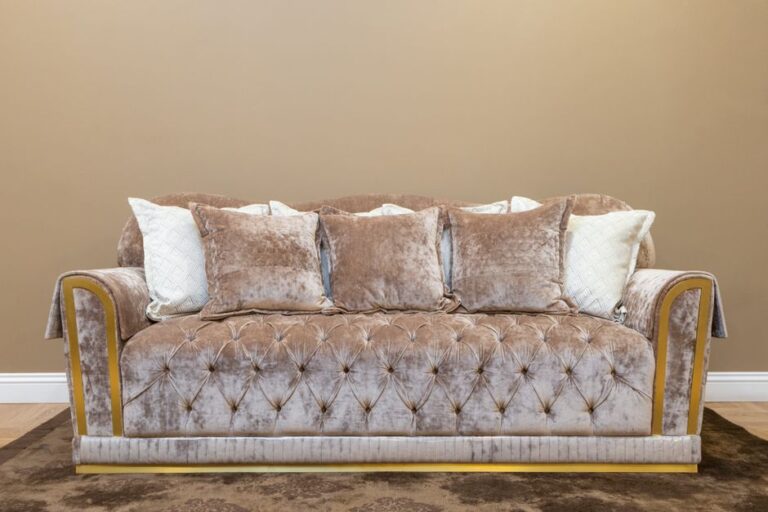
- Short‑pile velvet for a luxe look on a budget. It drapes beautifully and reads “upholstery” rather than “T‑shirt.”
- Two‑piece designs: One body cover plus a separate seat cushion cover. They look cleaner, especially on T‑cushions, and stay put.
- Elastic hems and anchor straps under the seat. Look for adjustable clips that run front to back, not only side to side.
Colors matter. Mid‑tones like taupe, sand, olive, and mid‑gray better disguise dust, lint, and minor size mismatches than stark white or black.
What to avoid if you want a tailored look
- Ultra‑thin jersey that telegraphs every lump and the original fabric pattern.
- One‑piece only on complex sofas with T‑cushions and big arms. It will shift daily.
- Shiny finishes that highlight wrinkles and stretch marks under daylight.
Foam Tucks and Upholstery Pins: Make It Stay Put
Good fitting is half the job; anchoring makes it last. A few inexpensive tools give you those crisp, magazine‑style lines.
How to use foam tucks the right way
- Insert dense foam rods deep into the seat‑back and seat‑arm crevices after smoothing the fabric outward and downward.
- Cut rods slightly longer than the crevice so they compress and lock in place.
- For daily use sofas, add a second rod where the arm meets the front of the seat to keep T‑cushion “ears” neat.
When and how to use upholstery pins
- Choose twist pins or short upholstery pins with spiral shafts. They grip woven fabric without long punctures.
- Pin only in hidden areas like the underside hem or behind skirt folds. Space every 8–12 inches.
- Avoid leather, faux leather, or fragile covers. Test in a concealed spot first. If you rent, confirm your sofa fabric can handle it to avoid damage.
On very slippery textiles underneath, layer a thin rug pad offcut on the seat deck before the slipcover to increase friction without bulk.
Step‑by‑Step: Fitting a Budget Sofa Slipcover under $120
Set aside 20–30 minutes. Clear the area and remove throw pillows so you are not fighting extras.
- Prep: Vacuum the sofa, fix loose threads, and if the original fabric sheds, cover with a lint‑free sheet to reduce transfer.
- Orient: Find the tags for “back” and “front.” Align centerlines with the sofa’s center.
- Drape: Pull the body cover down over the back first, then over the arms, then the seat.
- Smooth: With flat palms, push excess fabric toward seams and crevices, not toward the middle.
- Anchor: Add anchor straps beneath the seat, insert foam tucks, and adjust hem to skim the floor.
- Finish: For T‑cushions, zip or strap the separate cushion cover, then tuck the “ears” neatly and lock with foam.
If your living room refresh includes small furniture flips, pairing the new slipcover with a simple table makeover compounds the visual payoff. For ideas, see best thrifted coffee tables to flip on a $100 budget.
Buying Guide: Features Worth Paying for under $120
Price ceilings can be firm, but certain details still fit the budget and elevate the result.
- Separate cushion covers included for 2–3 seaters, ideally zippered.
- Thick jacquard knit or short‑pile velvet in the 230–300 gsm range when listed. If no weight is listed, rely on reviews that mention “not see‑through” and “holds shape.”
- Reinforced seams at arm fronts and corners to curb tearing during tucking.
- Anti‑slip straps with metal adjusters rather than plastic clips.
- Colorfast dyes noted as machine‑wash safe in cold water.
Skip “one‑size‑fits‑all” promises for sectionals. For L‑shapes or chaise sofas, look for modular sets sized by segment or separate chaise covers, even on a budget.
Wash‑Care Routines That Keep Slipcovers Looking New
Easy maintenance is where budget covers win. A realistic routine prevents sagging, pilling, and color fade.
The simple weekly routine
- Quick de‑lint with a fabric brush or lint roller before vacuuming the room.
- Spot clean spills immediately with a damp microfiber and mild soap. Blot, do not rub.
- Retuck foam rods during weekend resets to keep seams crisp.
Machine washing without disasters
- Cold water, gentle cycle, mild detergent, no bleach.
- Zip everything and turn inside out to reduce abrasion.
- Air‑dry flat or on a rack. If using a dryer, choose low heat and remove slightly damp to reduce wrinkles.
- Refit while warm so the knit relaxes over the frame and tightens as it cools.
If you plan a living room refresh weekend, schedule slipcover washing before other DIY so the space stays functional. For detailed fabric handling habits from another context, my guide on adhesion tests and prep shows why patience with prep always pays off, even outside paint projects.
Styling a Slipcovered Sofa so It Reads “Tailored”
Once the fit is right, styling choices make the budget move look intentional, not temporary.
- Limit pillows to two or three with solid covers in a similar texture. Too many add visual noise and fight the smooth slipcover lines.
- Add weight with a cotton throw folded lengthwise over one arm. It helps hold tucks near the arm seam.
- Coordinate wood tones on nearby pieces to avoid clash. If your pine looks too orange against a cool gray slipcover, consider a subtle refinish like a budget whitewash to neutralize yellow undertones.
- Mind proportions: A skirt that barely kisses the floor reads custom. If it pools, re‑tuck and tighten straps.
Common Fit Problems and How to Fix Them Fast
Even good covers shift. Here is how to solve the most frequent issues without buying extras.
- Loose arms: Add a small foam rod inside the arm seam and run an anchor strap diagonally beneath the seat.
- Baggy back: Pull excess downward, twist‑pin at the lower back edge in the lining only, then hide with the hem.
- Wrinkled seat: Lift the front edge, smooth back to front, refit the seat cover, and lock both side crevices with fresh foam.
- Pattern show‑through: Layer a neutral cotton sheet under the slipcover as a lining. Choose thick fabrics next time.
Safety and Rental‑Friendly Notes
Slipcovers are a smart reversible upgrade for renters. Avoid adhesives on upholstery and test pins in inconspicuous spots. I learned the hard way in another DIY that rushing prep leads to sticky, peeling finishes; with textiles, the equivalent mistake is skipping measurements and anchors, which costs time and still looks messy.
If your makeover expands beyond fabric, stick to reversible, deposit‑safe projects. For living room ambiance without drilling, check our plug‑in sconces in a rental without drilling tutorial. And if a side piece needs love, this primer on why paint peels off thrifted furniture helps you avoid common pitfalls.
Budget Planning: Keep It under $120 without Regret
Set a ceiling, then allocate by impact. You are buying coverage and drape, not logos.
- $60–$90: One‑piece covers for small sofas or loveseats with box cushions in thicker jacquard knits.
- $80–$120: Two‑piece sets for standard three‑seaters, T‑cushion variants, or short‑pile velvet options.
- $10–$20: Foam tucks and a pack of twist pins that you will reuse for years.
Before checkout, re‑match specs to your measurements and confirm the return window. The cheapest option is not a deal if it slides daily or shows the original fabric pattern.
Frequently Asked Questions
Do slipcovers work on bulky, rounded arms and deep seats?
Yes, but choose two‑piece or three‑piece sets in thick jacquard or velvet and plan on foam tucks at every seam break. Measure arm height and width carefully and stay within the maker’s stretch range.
Can I use upholstery pins on leather or faux leather?
No. Pins can puncture and mark the surface. Use foam tucks and under‑seat straps only, or choose a tailored throw technique that does not require piercing the upholstery.
How do I keep a white slipcover bright without bleaching?
Wash in cold water with a gentle detergent and an oxygen‑based brightener if the care label allows. Air‑dry and refit slightly damp. Avoid bleach, which can weaken fibers and yellow over time.
Are separate cushion covers worth it for T‑cushions?
Yes. Separate covers follow the seat shape, reduce bulk at the “ears,” and stay put better with daily use. They are the easiest path to a tailored look on complex cushions.
What is the fastest way to fix a saggy hem that shows sofa legs?
Retighten anchor straps, push extra fabric downward, insert foam tucks along the base, and steam lightly if the fabric allows. A hem that kisses the floor immediately looks more custom.
Relacionados
How to Swap Rental Cabinet Hardware Without New Holes: measure existing center‑to‑center, use backplates to cover scars, pick correct screw lengths, and store originals for under $80
How to Install Floor-to-Ceiling Curtains in a Rental Without Drilling: measure stack-back and mount height, use tension or no-drill brackets, no-sew hem to kiss/puddle lengths, and add blackout liners for under $120
Complete guide to Peel-and-Stick Wallpaper in Rentals: calculate pattern repeat and overage, prime for adhesion, seam-match around corners, and remove cleanly on a $150 budget
How to Make a Rental-Safe Upholstered Channel Headboard from a Thrifted Frame: measure stud-free mounting height, cut foam and batting strips, wrap durable fabric, and hang with removable cleats for under $140