If you want stylish organization without drilling a single hole, renter-safe tension pole shelving is one of the most practical, reversible systems available today. This guide shows you exactly how to measure ceiling height with precision, verify weight ratings, plan stud-free layouts, install neatly, and remove cleanly, while keeping total costs under $150 with smart choices and no risky shortcuts.
What is renter-safe tension pole shelving and why choose it
Tension pole shelving uses a floor-to-ceiling pole with an internal spring or threaded mechanism to create secure vertical pressure. Shelves clamp or lock onto the pole, giving you instant storage without screws or wall anchors.
It is ideal for rentals because it preserves walls, moves with you, and adapts to awkward corners where traditional furniture will not fit. When chosen and installed correctly, it looks intentional rather than temporary, and it can blend into a minimalist or warm, functional aesthetic.
I learned early in a strict rental that preserving the deposit comes first. Reversible systems like tension poles saved me from drilling, and they still delivered real storage where I needed it most.
How to measure ceiling height accurately for tension poles
Accurate measurements prevent slippage, leaning, and ceiling scuffs. A pole that is too short cannot lock safely. A pole that is too long can damage paint or crack brittle plaster.
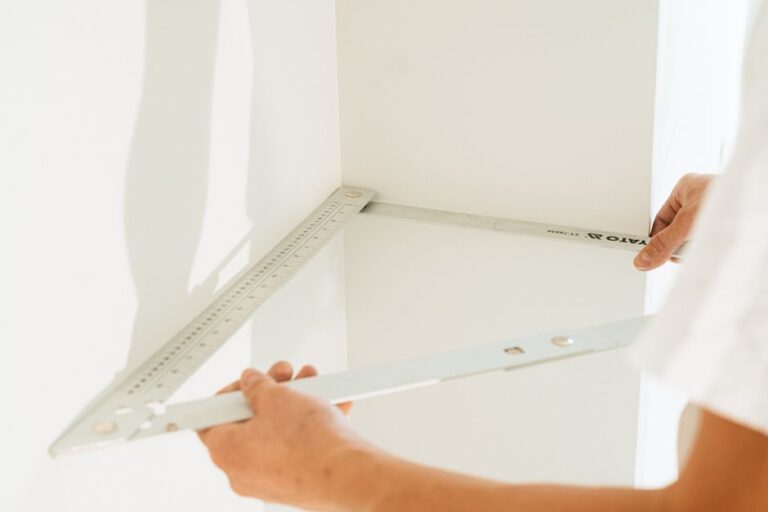
Measure in three spots and note the smallest number
- Measure floor-to-ceiling in at least three places along the intended line of installation: left, center, and right or front and back corners.
- Write down the smallest measurement. Old buildings are rarely perfectly level, and you want the pole’s adjustment range to cover the shortest point comfortably.
- Measure again after moving rugs or mats. Soft surfaces compress and can change the effective height once the pole is under tension.
Account for baseboards, crown molding, and drop ceilings
- If baseboards flare out, position the pole just beyond the protrusion or choose a pole foot that sits fully on the flat floor surface.
- With crown molding, avoid resting the top pad against the angled face. Shift the pole so the top pad meets a flat, load-bearing section of the ceiling.
- For drop ceilings with tiles, do not tension against a loose panel. Only install to a solid support surface with manufacturer approval. When in doubt, pick another location.
Match the pole’s expansion range to your measurement
- Check the manufacturer’s minimum and maximum height range. Your smallest measured height must fall well within that range.
- Some poles have add-on extenders. Use the minimum number needed to reduce flex and keep the structure stable.
- Confirm the type of adjustment: spring-only designs install quickly but may drift under heavy load, while screw-threaded designs offer finer control and a firmer lock.
Verify weight ratings and choose durable, budget-friendly materials
Weight capacity is not a guess. Always follow the manufacturer’s stated weight limits for both the pole and each shelf component. Exceeding ratings risks slippage and damage.
How to read and respect weight ratings
- Look for two numbers: total system capacity and per-shelf capacity. The lower number governs what you actually store.
- Distribute weight vertically. Heavier items belong on lower shelves to lower the center of gravity and reduce sway.
- Avoid point loads. Use bins or trays to spread weight evenly across shelf slats or panels.
Material choices: wire, bamboo, MDF, or plastic
- Wire shelves are light, ventilated, and budget-friendly. Use liners for small items to prevent tipping and to create a more finished look.
- Bamboo or solid wood shelf inserts warm up the look and resist sagging when sized appropriately. Seal raw edges lightly to prevent humidity warping in bathrooms.
- MDF can look sleek when kept dry and supported well. Keep it away from active steam zones and wipe spills quickly.
- Plastic trays are easy-care in bathrooms and closets. Choose matte textures to avoid the visual clutter that shiny surfaces can create.
Budget checklist to stay under $150
- Choose a single-pole kit with two to four shelves. Expansion kits and elaborate accessories add cost fast.
- Prioritize quality contact pads and a threaded tension mechanism over fancy organizers. Stability comes first.
- Use affordable accessories you already own, like neutral bins and baskets, before buying new ones. Align colors to reduce visual noise.
- Upgrade the look with low-cost touches: cut-to-size shelf liners, matching hardware on add-on hooks, and a consistent bin width for easy alignment.
Map stud-free layouts and safe placements
Because tension poles do not rely on studs, your planning is about clearance, stability, and surface integrity. Walk the space and test reach before installing.
Placement rules for kitchens, bathrooms, bedrooms, and entryways
- Kitchens: Keep clear of cooktops and ovens. Heat and grease degrade pads and shelves. Reserve poles for pantry corners or dead zones beside the fridge.
- Bathrooms: Place outside the strongest splash zone to protect wood shelves and reduce mildew. Ventilate well.
- Bedrooms and living rooms: Use alcoves to reduce side-to-side sway. Watch for HVAC vents that can flutter lightweight items.
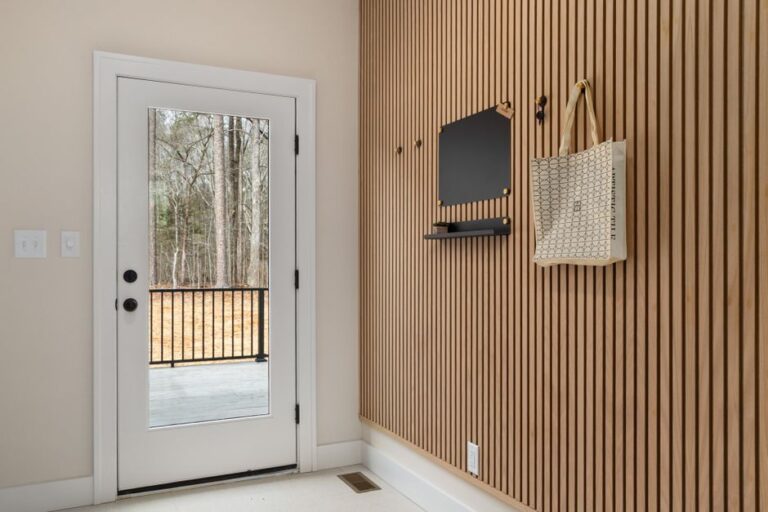
- Entryways: A slim pole with hooks can create a mini drop zone for scarves and bags. Pair it with a low bench or cube unit for shoes.
Check for obstacles and building rules
- Avoid sprinkler heads, smoke detectors, and alarm sensors. Maintain clearances required by your building.
- Inspect ceilings for flaking paint or hairline cracks. Choose a different location if surfaces are compromised.
- Test floor friction. Highly polished stone may need a high-grip bottom pad to prevent micro-slides.
Protect surfaces from marks
- Clean contact spots with a mild, residue-free cleaner, then let them dry completely. Oils and dust reduce grip.
- Use non-staining, non-marking rubber pads on both ends. If you add a protective layer, choose low-tack painter’s tape under the top pad only, and test in an inconspicuous spot first.
- Avoid felt pads at the top. Felt can compress and cause movement. Save felt for furniture feet, not tension points.
Step-by-step installation for renter-safe tension pole shelving
Take your time on alignment and tension. A careful install pays off in everyday stability and a cleaner look.
Set, level, and lock
- Dry-fit the pole between floor and ceiling without full tension to confirm placement and shelf heights.
- Set the lowest shelf first. Keep it a few inches above baseboards to avoid interference and to allow easy floor cleaning.
- Use a small bubble level or a phone level app to check vertical plumb. Adjust foot position until the pole is straight.
- Apply tension gradually. With threaded designs, turn until the pole is firm, then add small quarter turns. With spring designs, follow the exact instructions for safe compression.
- After tensioning, tug gently side to side and front to back. If there is noticeable sway, reduce shelf load or choose a tighter alcove.
Secure and dress the shelves
- Lock each shelf clamp fully and double-check that teeth or collars engage as designed.
- Add liners or trays to create flat surfaces for small items. This looks more built-in and helps with cleaning.
- Place heavier items on the bottom shelf, lighter decor up high, and keep a consistent left-to-right rhythm for visual calm.
Removal and clean, damage-free reset
Removal should be as methodical as installation. Rushing is how paint gets marred or pads leave rings.
How to release tension safely
- Empty all shelves first. Do not fight gravity with a loaded system.
- Reverse the tension process slowly. Keep one hand on the pole so it does not tip as pressure releases.
- Lift the pole away from the ceiling vertically to avoid scraping crown molding or light textures.
Erase marks and restore surfaces
- Clean any rubber marks with a soft sponge and a gentle cleaner suitable for your paint finish. Test before scrubbing.
- If you used low-tack tape under the top pad, remove it at a shallow angle and wipe residue with a damp cloth.
- For minor compression in carpet, brush fibers back up with a spoon edge or a soft brush.
Style it so tension pole shelving looks built-in
You can elevate a basic pole system with a few strategic choices that keep costs down and the look cohesive.
- Repeat one or two materials across shelves, like bamboo trays and matte black hooks, to create a consistent story.
- Use bins in a single color family and label discreetly. Hidden containment keeps visual noise in check.
- Align shelf fronts and keep even gaps. Symmetry is free and reads as custom.
- Coordinate with nearby elements, like a small bench or cube unit, to ground the vertical line and add shoe or bag storage. For a seamless look, see how to make budget cube shelves look built-in.
Smart alternatives and complementary renter-safe storage
Not every corner suits a pole. When you need door-mounted or wall-adjacent options, there are renter-safe systems that pair well aesthetically.
Common mistakes to avoid with tension pole shelves
Most frustrations trace back to rushing prep or ignoring the basics of fit and load. Avoid these pitfalls from the start.
- Buying before measuring. Always confirm ceiling height, alcove width, and clearance for doors or drawers that swing nearby.
- Overloading the top shelf. Keep the center of gravity low and respect per-shelf limits.
- Tensioning against weak or dirty surfaces. Clean, dry, and solid contact points are mandatory.
- Skipping a stability test. Nudge the pole gently in all directions before use, then recheck after 24 hours.
- Forgetting building rules. Know the no-go zones around sprinklers and detectors.
FAQ: renter-safe tension pole shelving
Will tension pole shelves damage my ceiling or floors?
When installed correctly on clean, solid surfaces with non-marking pads, they should not cause damage. Avoid fragile textures, flaking paint, and loose tiles. Release tension slowly during removal and clean any light marks with a gentle cleaner.
How much weight can I put on each shelf?
Follow the manufacturer’s stated limits for both the system and each shelf. Place heavier items on lower shelves and distribute weight evenly using bins or trays. If the product literature is unclear, contact the seller for written specifications before buying.
Are tension pole shelves safe in bathrooms with humidity?
Yes, if you choose moisture-friendly materials and ventilate. Favor wire or plastic shelves, or sealed wood, and keep the pole outside the strongest steam zone. Wipe condensation and allow airflow to prevent mildew and swelling.
Can I use a tension pole on carpet or rugs?
You can, but expect slight compression. Measure with the rug in place and choose a pole with firm, high-grip pads. Recheck tension after 24 hours and again after a week, especially on plush pile.
How do I keep the setup under $150 without it looking cheap?
Pick a solid basic kit, then upgrade the styling with affordable liners, matching bins, and consistent spacing. Spend on stability features like threaded tension and quality pads, and save by reusing neutral containers you already own.
Relacionados
How to Set Up a Tiny Entryway Drop Zone That Stays Clutter-Free: map door swing and traffic paths, choose shallow shoe storage, add damage-free hooks and a mail/key catchall, and create a 5‑minute nightly reset under $120
How to Build a Rental-Safe Closet System Without Drilling: measure double-hang vs long-hang zones, choose tension rods and freestanding towers, add slim velvet hangers and over-door organizers for under $160
Complete guide to renter-safe tension pole shelving: measure ceiling height accurately, verify weight ratings, map stud-free layouts, and remove cleanly for under $150
How to Create a Designer-Looking Entryway Drop Zone for Under $75: Hidden Shoe Storage, Mail Sorting, and Rental-Safe Mounting