
Make a Small Entryway Feel Intentional
Define a small entry with scale, landing surfaces, mirror placement, and one visual cue that says the home starts here.

By Jamal Reeves · May 11, 2026 · 4 min read
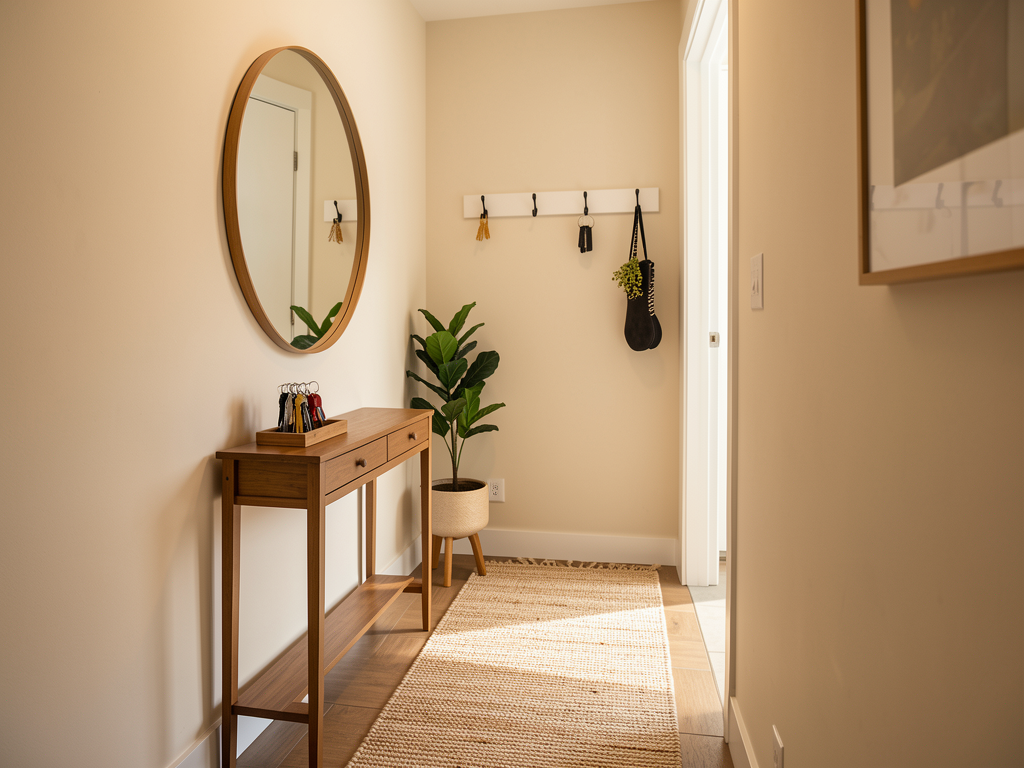
The fastest way to improve small entryway is not to buy the most dramatic object. It is to understand the small visual decision that keeps repeating in the room. In this case, the recurring issue is simple: without a clear boundary, the entry becomes just a hallway with objects in it. When that friction is ignored, the room can be technically furnished and still feel unfinished.
This guide treats Make a Small Entryway Feel Intentional as a practical design system for real homes. It is written for renters, busy households, and readers who want a better-looking room without turning the house into a showroom.
Start with the visible friction
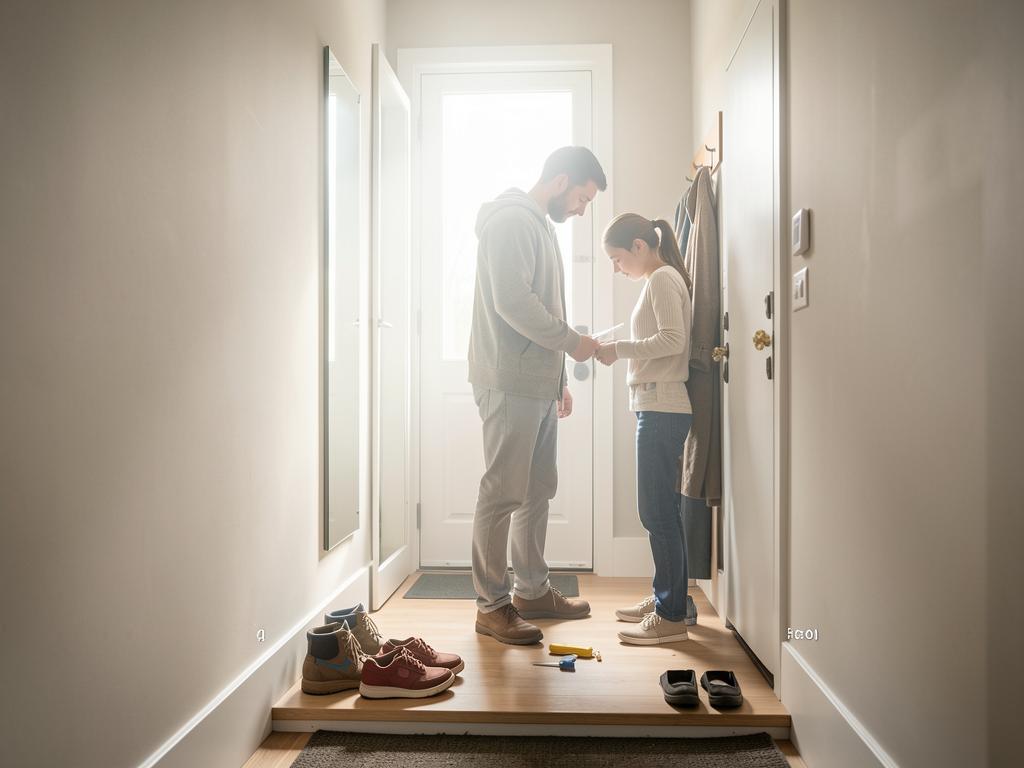
Stand at the doorway and notice what your eye reads first. Do not begin with a shopping list. Begin with the visible friction: landing surface, wall cue, mirror height, shoe limit, and path clearance. In an ordinary small entryway, those details decide whether the space feels calm, intentional, or visually noisy.
A useful first pass takes ten minutes. Remove the objects that are clearly out of place, then put back only what supports the room’s job. If the room still feels wrong after that edit, the issue is probably proportion, light, color rhythm, or storage logic rather than the number of objects.
The field test
| Decision point | What to check in this small entryway | Practical move |
|---|---|---|
| Main friction | Without a clear boundary, the entry becomes just a hallway with objects in it | Name the friction before changing objects. |
| Visual anchor | Landing surface, wall cue, mirror height, shoe limit, and path clearance | Use it as the rule for what stays visible. |
| Materials | Slim console, round mirror, two hooks, key tray, narrow runner, and one closed shoe basket | Repeat two or three materials instead of adding more categories. |
| Review signal | Whether the entry works when two people arrive at the same time | Revisit the setup after one ordinary week. |
The field test matters because a room is not evaluated only in a finished photograph. It has to work during a rushed morning, a quiet evening, and a normal reset. For make a small entryway feel intentional, the most useful signal is whether the entry works when two people arrive at the same time. If the answer is no, simplify the system before adding a new piece.
Build the change in layers
Work in three layers. First, decide what must remain visible for the room to function. Second, choose which visible items deserve better alignment, repetition, or spacing. Third, add one detail that makes the result feel deliberate. For this room, the most reliable materials are slim console, round mirror, two hooks, key tray, narrow runner, and one closed shoe basket.
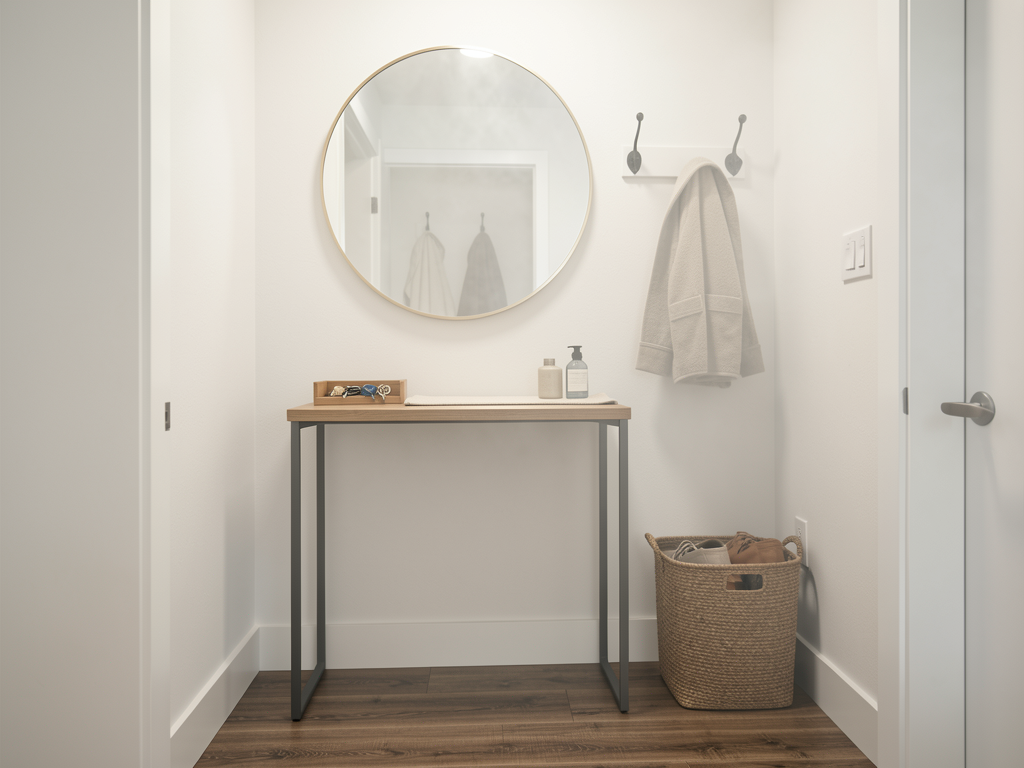
The practical move is this: create an arrival moment without stealing walking space. That sentence should guide every small decision. If an object does not support the sentence, it either needs a better place, a calmer container, or a reason to leave the room entirely.
A realistic example
Imagine the room on a Thursday evening, not on a styling day. Someone enters, uses the space, drops one item, adjusts the light, and leaves. A fragile design collapses immediately. A useful design absorbs that ordinary behavior because it gives common objects a clear place and gives the eye a clear rhythm.
In a small entryway, the rhythm usually comes from repeated material, consistent spacing, and one visible anchor. The anchor does not need to be expensive. It can be a lamp, a tray, a textile, a frame line, a rug edge, or a storage boundary. What matters is that the same visual rule appears more than once.
Mistakes to avoid
- Do not copy a room from a photo without checking your own light and fixed finishes.
- Do not add containers before deciding what should stay visible.
- Do not solve a proportion problem with more small decor.
- Do not judge the result only from close up; step back to the doorway.
- Do not keep an arrangement that looks good but takes too long to reset.
Maintenance rule
Give the change a one-week review. If the setup still works after normal use, keep it. If the room slowly returns to visual noise, the system is too delicate. Reduce the number of visible categories, repeat one material more clearly, or move the most distracting item behind a closed front.
Related reading
Continue with A Home Office Corner That Blends In, Make Low Ceilings Feel Lighter, Define Studio Apartment Zones With Light and Rugs. Those guides approach the same home from nearby decisions, so the room can improve as a connected system instead of a collection of unrelated fixes.
Final takeaway
Make a Small Entryway Feel Intentional works when the room becomes easier to read and easier to reset. The goal is not a perfect interior. The goal is a home that communicates care, supports daily use, and still feels like people live there.
Read next
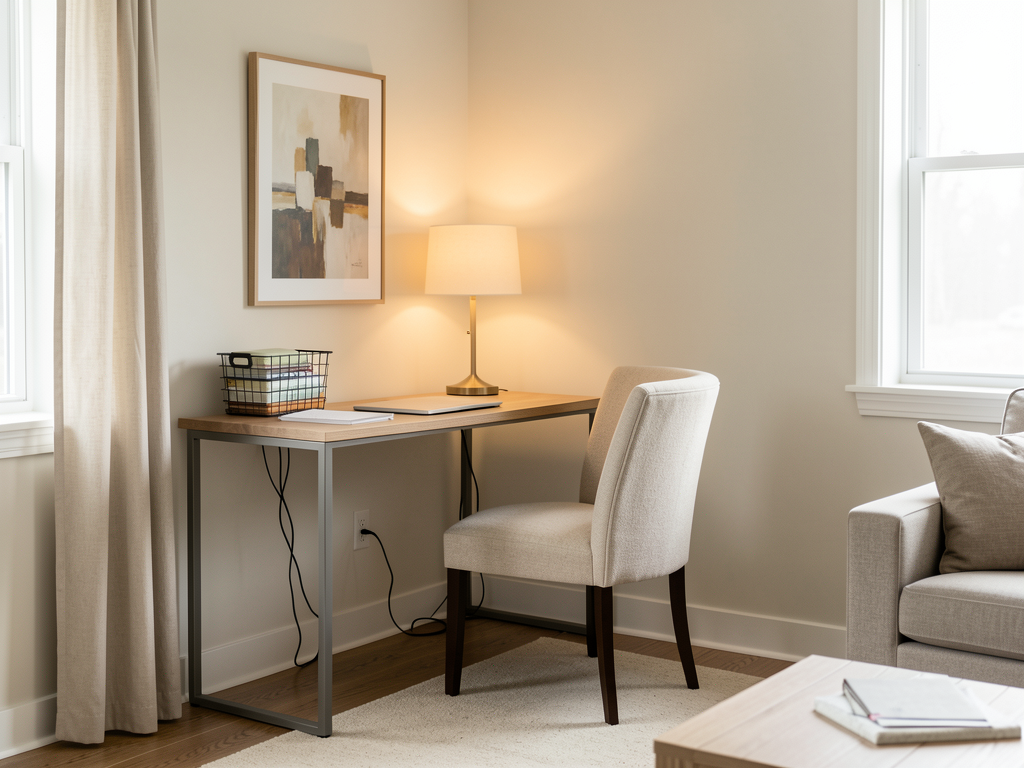
A Home Office Corner That Blends In
Make a compact work corner feel connected to the room with furniture scale, cable control, and softer transitions.
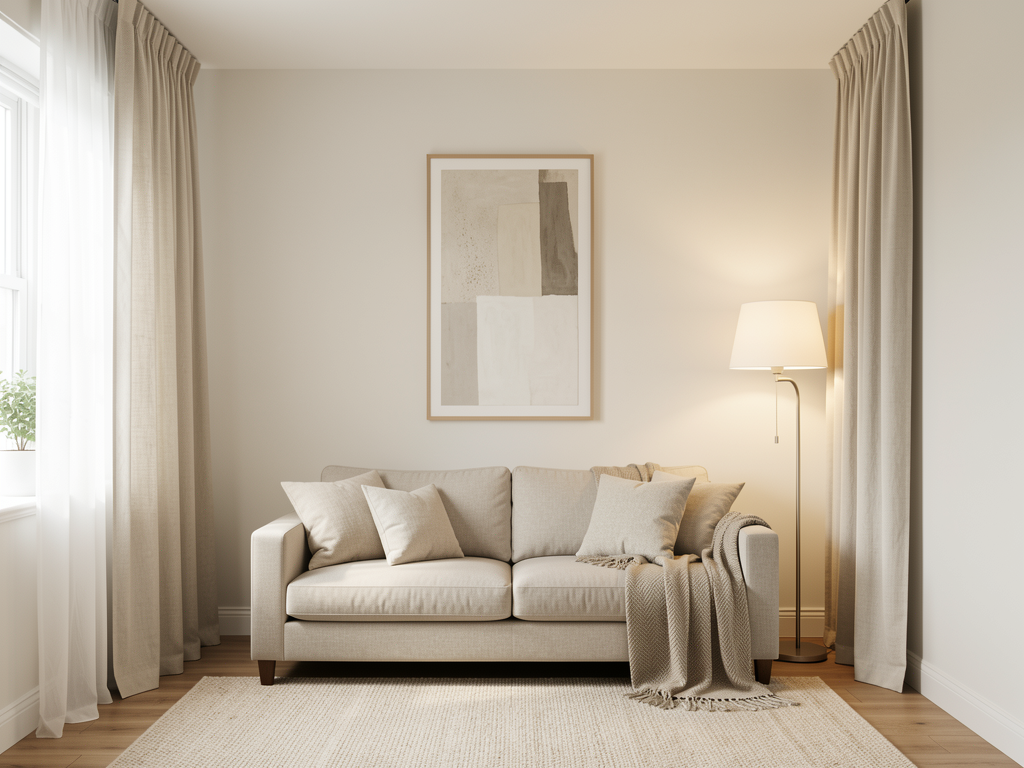
Make Low Ceilings Feel Lighter
Use vertical lines, lower contrast, curtain height, and lighting layers to reduce the heavy feeling of low ceilings.
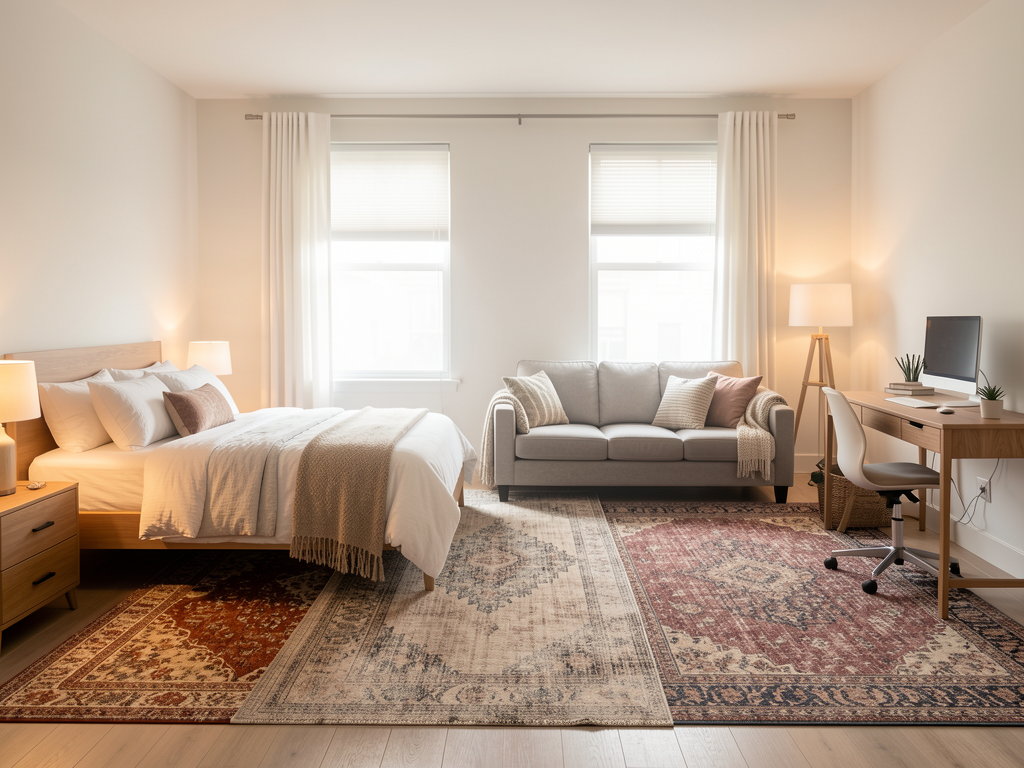
Define Studio Apartment Zones With Light and Rugs
Use rug edges, lamp pools, and furniture orientation to create zones in a studio without building walls.